

7-3-2-1 Study Method Timer
Current Phase Guide
- 7 Min (Input): Read, listen, or watch. Focus on absorption.
- 3 Min (Process): Summarize key points in your own words.
- 2 Min (Output): Teach the concept aloud to someone imaginary.
- 1 Min (Review): Self-test and recall main ideas quickly.
Session Stats
Have you ever spent hours highlighting textbooks only to forget everything the next morning? You are not alone. Most students fall into the trap of passive studying-reading, re-reading, and underlining-believing that familiarity equals mastery. It does not. The brain needs friction to learn. Enter the 7-3-2-1 study method, a structured approach designed to maximize retention by combining multiple learning styles within a single session.
This method isn't just about timing; it's about cognitive load management. By breaking your study time into distinct phases of input, processing, output, and review, you transform information from short-term memory into long-term knowledge. If you are preparing for exams, whether for school or professional certification, this framework can save you time and boost your scores.
The Core Concept: Why 7-3-2-1 Works
The 7-3-2-1 method is a time-boxed study technique that allocates specific minutes to four different cognitive activities: listening/reading (7), writing/summarizing (3), teaching/explaining (2), and reviewing/testing (1).The numbers represent minutes in a 13-minute cycle. While 13 minutes might seem short, the power lies in the intensity and variety of tasks. Traditional studying often involves one mode for an hour-like reading a textbook cover-to-cover. This leads to mental fatigue and diminishing returns. The 7-3-2-1 model forces you to switch gears, keeping your brain engaged and preventing boredom.
Here is how the breakdown works:
- 7 Minutes (Input): Active consumption of material. This could be listening to a lecture, reading a chapter, or watching a tutorial video. The key here is focus. No distractions, no multitasking.
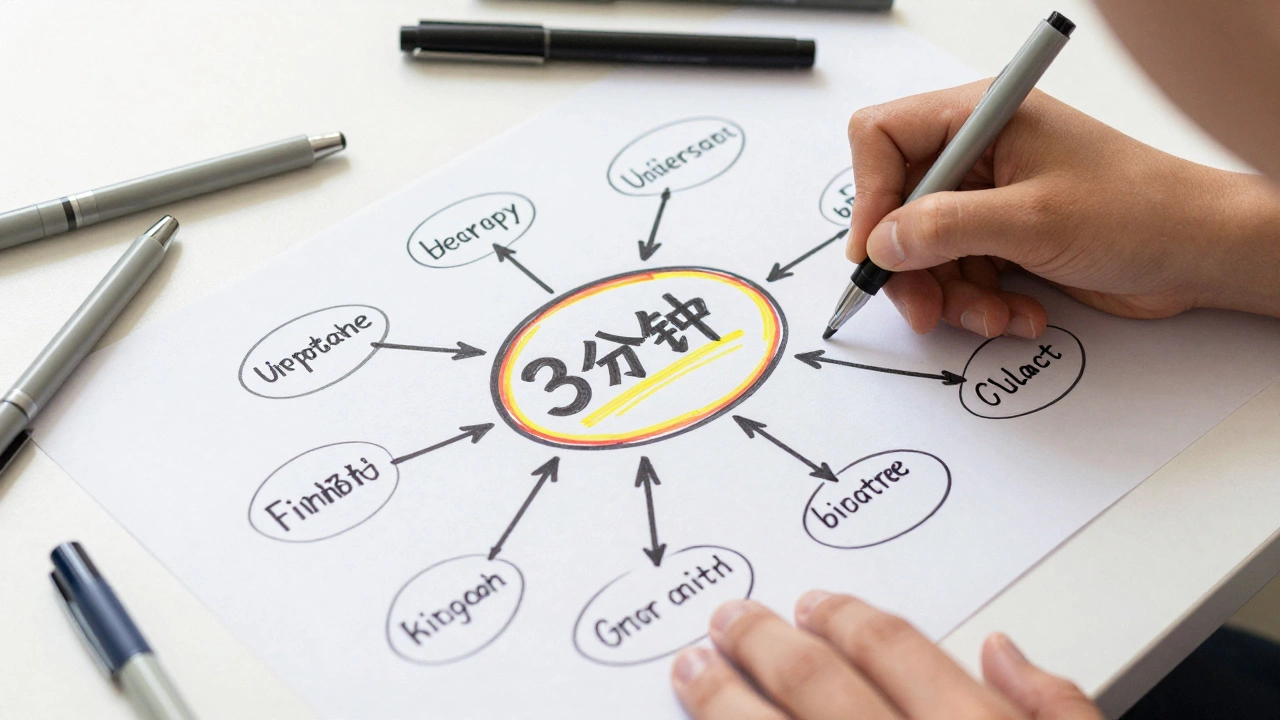
- 3 Minutes (Processing): Immediate synthesis. You write down key points, create mind maps, or summarize what you just consumed in your own words. This bridges the gap between hearing and understanding.
- 2 Minutes (Output): The Feynman Technique in action. You explain the concept out loud as if teaching it to someone else. If you stumble, you know exactly where your knowledge gaps are.
- 1 Minute (Review): Quick self-testing. Glance at your notes or flashcards to reinforce the main ideas before moving on.
Step-by-Step Implementation
Implementing the 7-3-2-1 method requires discipline, but the setup is simple. You need a timer, your study materials, and a notebook. Here is how to execute each phase effectively.
Phase 1: The 7-Minute Input Sprint
During these seven minutes, your goal is absorption. However, passive reading is still a risk. To make this active, use the "question-first" approach. Before you start reading or listening, look at the headings and ask yourself, "What do I want to know from this section?" Then, consume the content with that question in mind. Highlight sparingly-only mark facts that directly answer your questions. If you find yourself zoning out, shake it off and refocus. Seven minutes is short enough to maintain high concentration.
Phase 2: The 3-Minute Synthesis
Stop consuming. Start creating. In these three minutes, close your book or pause the video. Write down the core concepts without looking. Use bullet points, diagrams, or flowcharts. Do not worry about neatness; speed and clarity matter more. This step forces your brain to organize the information logically. If you cannot summarize it in three minutes, you likely didn't understand it well enough during the input phase. That is valuable feedback.
Phase 3: The 2-Minute Teaching Moment
This is the most critical step for deep learning. Stand up, walk around your room, and explain the topic out loud. Pretend you are teaching a beginner. Use simple language. Avoid jargon unless you define it. For example, if you are studying biology, don't just say "mitochondria produce ATP." Say, "Mitochondria act like batteries, converting food energy into usable power for the cell." If you get stuck, note that gap. Go back to your notes immediately after the two minutes are up to fill it.
Phase 4: The 1-Minute Review
Use this final minute for rapid reinforcement. Look at your summary from Phase 2. Cover it up and try to recall the main points again. Or, use a set of flashcards. The goal is to trigger retrieval practice, which strengthens neural pathways. Once the minute is over, take a short break or move to the next topic using the same 7-3-2-1 cycle.
Integrating Spaced Repetition
The 7-3-2-1 method handles immediate retention, but long-term memory requires spaced repetition. You cannot rely on a single 13-minute cycle to remember something for an exam weeks away. Combine 7-3-2-1 with a spaced repetition schedule.
After completing several 7-3-2-1 cycles on a topic, schedule reviews at increasing intervals:
- Day 1: Initial study sessions using 7-3-2-1.
- Day 2: Review your summaries and teach the concepts again (skip the input phase).
- Day 4: Another quick review and self-test.
- Day 7: Final consolidation before the exam.
This hybrid approach ensures that you encode information deeply during the initial session and then reinforce it just before you are likely to forget it. Tools like Anki or Quizlet can help automate the scheduling of these reviews.
| Technique | Time Efficiency | Retention Rate | Best For |
|---|---|---|---|
| Passive Reading | Low | ~10% | Familiarity with broad topics |
| Pomodoro (25/5) | Medium | ~50% | Maintaining focus during long sessions |
| 7-3-2-1 Method | High | ~85% | Deep understanding and active recall |
| Spaced Repetition | Variable | ~90%+ | Long-term memorization |
Common Pitfalls and How to Avoid Them
Even the best methods fail if applied incorrectly. Here are common mistakes students make when trying the 7-3-2-1 method:
- Rushing the Input Phase: Trying to read too much in seven minutes leads to shallow understanding. Choose smaller chunks of material that fit the timeframe. Quality over quantity.
- Skipping the Teaching Step: Many students feel silly talking to themselves. Resist this urge. Explaining concepts aloud reveals misunderstandings that silent reading hides.
- Ignoring Distractions: Put your phone in another room. Seven minutes of focused study is worth more than thirty minutes of distracted browsing.
- No Breaks Between Cycles: After each 13-minute cycle, take a 2-3 minute break. Stretch, drink water, or look out the window. Your brain needs downtime to consolidate memories.

Adapting 7-3-2-1 for Different Subjects
The beauty of this method is its flexibility. You can adapt it to various disciplines:
- Mathematics: Spend 7 minutes solving problems, 3 minutes checking steps and noting formulas, 2 minutes explaining the logic behind the solution, and 1 minute reviewing key equations.
- Languages: Listen to audio (7), write new vocabulary (3), speak sentences aloud (2), and quiz yourself on pronunciation (1).
- History: Read a primary source (7), outline the timeline (3), narrate the event sequence (2), and test dates/names (1).
By tailoring the activities to the subject matter, you ensure that each phase remains relevant and engaging. The structure stays the same, but the content shifts to match your needs.
Why This Beats Traditional Cramming
Cramming relies on massed practice-studying intensively right before an exam. It might get you through the test, but you will forget almost everything shortly after. The 7-3-2-1 method promotes distributed practice and active engagement. Studies show that active recall (testing yourself) and elaboration (explaining concepts) lead to significantly better long-term retention than passive review.
Moreover, the short bursts reduce anxiety. Facing a three-hour study block can be overwhelming. Committing to just 13 minutes feels manageable. Once you start, momentum often carries you forward. You build confidence with each completed cycle, making study sessions less stressful and more productive.
Is the 7-3-2-1 method suitable for beginners?
Yes, it is excellent for beginners because it breaks down complex tasks into small, manageable steps. The clear structure reduces decision fatigue and helps new learners establish good study habits early on.
Can I use the 7-3-2-1 method for group studying?
Absolutely. During the 2-minute teaching phase, you can explain concepts to your study partners. They can then provide feedback or ask questions, enhancing the learning experience for everyone involved.
How many 7-3-2-1 cycles should I do in a day?
It depends on your stamina and goals. Aim for 4-6 cycles per study session, with short breaks in between. This totals about one to one-and-a-half hours of focused work, which is sustainable for most people.
Does the 7-3-2-1 method work for visual learners?
Yes. Visual learners can adapt the 3-minute synthesis phase by drawing diagrams or mind maps instead of writing text. The key is to engage multiple senses, which enhances memory encoding.
What if I don't finish the material in 7 minutes?
Stick to the timer. If you run out of time, move to the next phase anyway. This forces you to prioritize the most important information. You can always revisit difficult sections in a later cycle or during review days.
Write a comment