

Exam Breathing Exercise Tool
Box Breathing Exercise
A simple breathing technique to calm your mind during exam stress.
How to use: Follow the breath cycle. Inhale for the specified time, hold your breath, exhale slowly, then hold again. Repeat for 4 cycles to reduce anxiety.
Exams don’t just test what you know-they test how well you can perform under pressure. You might have studied for weeks, memorized every formula, and highlighted every textbook page. But if your body is exhausted and your mind is racing, none of that matters. The truth is, exam preparation isn’t just about books and flashcards. It’s about your sleep, your breathing, your meals, and how you talk to yourself in the quiet moments before the test starts.
Start with your body-your brain needs fuel
Your brain uses 20% of your body’s energy, even when you’re sitting still. If you’re skipping meals, drinking too much coffee, or surviving on energy drinks, you’re running on fumes. On exam day, your brain needs steady fuel-not a sugar spike that crashes by 10 a.m.
Three days before the exam, start eating like your brain depends on it-because it does. Focus on complex carbs like oats, sweet potatoes, and brown rice. Add protein from eggs, lentils, or tofu. Healthy fats from avocado, nuts, and olive oil help with memory retention. Avoid processed snacks. They make you sluggish and foggy.
Hydration matters more than you think. Even mild dehydration (just 2% loss of body weight in water) can reduce concentration, slow reaction time, and increase anxiety. Drink water consistently. Keep a bottle on your desk. If you’re urinating less than four times a day, you’re not drinking enough.
And sleep-don’t try to cram the night before. Studies show that students who sleep 7-8 hours the night before an exam score 10-15% higher on average than those who pull an all-nighter. Your brain consolidates memories while you sleep. Skimping on rest doesn’t make you smarter-it makes you forget what you already learned.
Train your mind like an athlete trains for a race
Think of your brain like a muscle. You wouldn’t run a marathon without training. So why expect your focus to hold up for two hours without practice?
Start doing timed practice tests under real conditions. Set a timer. Sit at a desk. Turn off your phone. No snacks. No breaks. Do this at least three times in the week before the exam. Your brain learns to stay sharp under pressure when it’s practiced the conditions.
When you get stuck on a question during practice, don’t panic. Train yourself to move on. Mark it, skip it, come back later. Most exams are designed so you can’t answer every question perfectly. The goal isn’t perfection-it’s smart pacing.
Also, practice active recall. Don’t just reread notes. Close the book and ask yourself: What were the three main points from yesterday’s chapter? Try to write them down. Then check. This method strengthens memory more than passive review.
Control your breathing-your secret weapon
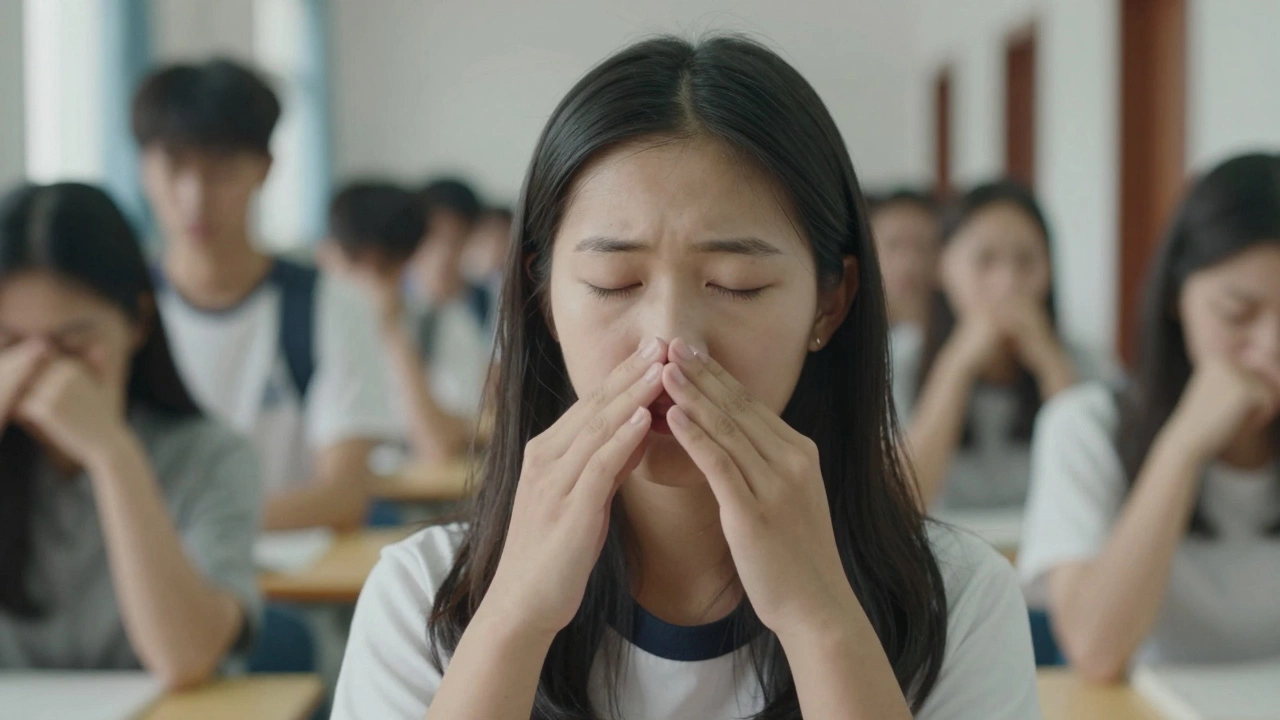
When anxiety hits, your body goes into fight-or-flight mode. Your heart races. Your hands shake. Your thoughts spiral. This isn’t weakness-it’s biology.
Here’s a simple trick that works for thousands of students: box breathing.
- Inhale through your nose for 4 seconds.
- Hold your breath for 4 seconds.
- Exhale slowly through your mouth for 4 seconds.
- Hold again for 4 seconds.
Repeat this four times. Do it while waiting outside the exam room. Do it before you open the paper. It resets your nervous system. It doesn’t make you calm-it gives you control.
Another trick: notice your thoughts. Instead of thinking, I’m going to fail, say, I’m feeling nervous, and that’s okay. I’ve prepared. You’re not trying to erase fear. You’re just changing your relationship with it.
Set up your exam day like a pro
The night before, lay out everything you need: ID, pens, calculator, water bottle, watch (if allowed). Put them by the door. No last-minute searches. No stress.
On exam day, eat a balanced breakfast-oatmeal with banana and peanut butter, or scrambled eggs with whole grain toast. Avoid sugary cereal. You’ll crash.
Arrive early. Not 5 minutes early. At least 20-30 minutes. This gives you time to settle, use the bathroom, and sit quietly. Don’t talk to other students who are panicking. Their stress is contagious.
When you get the paper, read all instructions first. Then skim the whole test. Notice how many questions are worth the most points. Plan your time. If Section A is 30% of the grade and has 10 questions, you shouldn’t spend 45 minutes on it.
What to do if your mind goes blank
This happens to everyone-even top students. Your brain freezes because adrenaline floods your system. You stare at the question. Nothing comes.
Here’s what to do:
- Put your pen down. Close your eyes for 10 seconds.
- Breathe using the box method.
- Look at another question. Answer something you know.
- Go back. Often, the answer will come once your brain is no longer in panic mode.
Don’t panic. Don’t erase. Don’t waste time. Just move and come back.
Recovery after the exam
Don’t sit there replaying every answer you got wrong. Don’t compare notes with others. Don’t check online forums for answers. You’ve already done the work. Now, let go.
Go for a walk. Eat something real. Talk to someone who doesn’t care about exams. Listen to music. Take a nap. Your brain needs to decompress.
And remember: one exam doesn’t define you. It’s a snapshot, not a verdict. You prepared. You showed up. That’s what matters.
What to avoid
- Energy drinks and excessive caffeine-jitters don’t help focus.
- Studying until 2 a.m.-you’ll forget more than you learn.
- Comparing your prep to others-everyone’s pace is different.
- Skipping meals to save time-your brain needs fuel.
- Checking your phone constantly-each notification resets your focus.
Final reminder: You’re not a machine
Exams are stressful, but they don’t have to break you. You don’t need to be perfect. You just need to be prepared-mentally and physically. Your body is your partner in this. Your mind is your tool. Treat them both with care.
Take care of your sleep. Eat real food. Breathe. Move. Trust what you’ve learned. And when the time comes, sit down, open the paper, and do your best. That’s all anyone can ask.
What’s the best way to study the night before an exam?
The best thing to do the night before is nothing. Review your summary notes for 20-30 minutes max. Then turn off your phone, go to bed early, and sleep. Trying to learn new material at this point just creates confusion. Your brain needs rest to lock in what you already know.
Can meditation help with exam stress?
Yes. Even five minutes of guided breathing or mindfulness before an exam can lower cortisol levels and improve focus. Apps like Insight Timer or Smiling Mind have short meditations designed for students. You don’t need to sit cross-legged for an hour-just pause, breathe, and reset.
Should I exercise during exam season?
Absolutely. A 20-minute walk, light jog, or even stretching breaks between study sessions boosts blood flow to the brain, reduces anxiety, and improves sleep. You don’t need to train for a marathon-just move. Movement is medicine for stressed minds.
What should I eat on exam day?
Choose slow-release energy foods: oatmeal, whole grain toast with peanut butter, eggs, yogurt with berries, or a banana with nuts. Avoid sugary cereals, pastries, or energy bars-they cause a quick spike and crash. Stay hydrated with water, not soda or juice.
How do I stop overthinking after the exam?
After the exam, don’t analyze every answer. You can’t change what’s done. Instead, do something completely unrelated-watch a funny video, call a friend, go outside. Give your brain permission to rest. Overthinking drains energy and increases anxiety for future exams.
Write a comment