

Adult Learning Barrier Analyzer
Select all the challenges you currently face when trying to learn something new. Then click Analyze to get personalized recommendations.
You sit down with a new textbook or open an online course, fully intending to master the material. But within days, the momentum fades. The concepts feel slippery, your attention drifts, and eventually, you close the book and never reopen it. If this sounds familiar, you are not alone. In fact, millions of adults abandon their educational goals every year, not because they lack intelligence, but because they face a unique set of invisible walls.
Understanding what stops adults from learning is the first step toward breaking through them. Unlike children, who learn in structured environments with dedicated time, adults juggle careers, families, and aging bodies while trying to acquire new skills. The barriers are psychological, physiological, and environmental. By identifying these specific roadblocks, you can redesign your approach to learning so it actually sticks.
The Myth of the "Rigid" Adult Brain
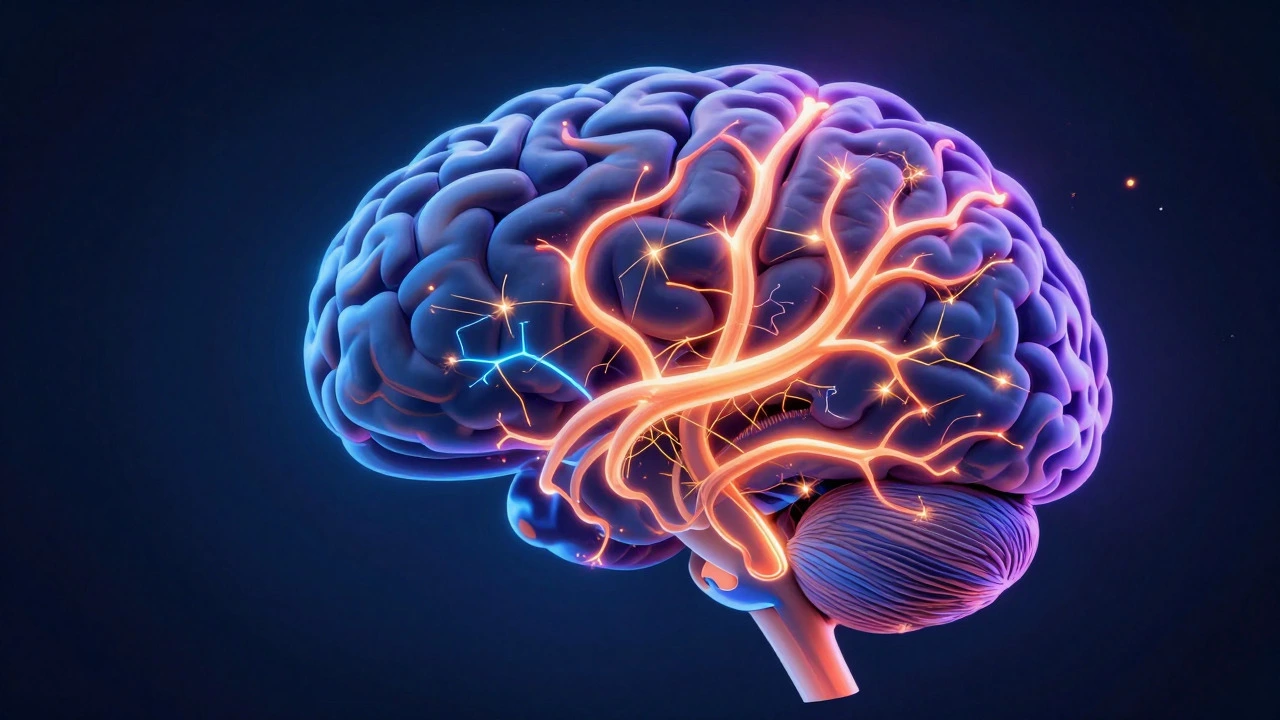
For decades, a pervasive myth held that neuroplasticity-the brain's ability to rewire itself-peaked in childhood and sharply declined in adulthood. This belief created a self-fulfilling prophecy: if adults believed their brains were "fixed," they stopped trying to change them. Modern neuroscience has debunked this. While processing speed may slow slightly after age 30, the capacity for synaptic growth remains robust throughout life.
Neuroplasticity is the brain's ability to form and reorganize synaptic connections in response to learning. Research shows that even in later adulthood, the hippocampus can generate new neurons (neurogenesis) when stimulated by novel, challenging tasks.The real issue isn't biological inability; it's efficiency. An adult brain is optimized for pattern recognition and existing knowledge retrieval. When you try to learn something entirely new, like coding or a foreign language, your brain resists because it wants to use established shortcuts. This resistance feels like "stupidity" or "forgetfulness," but it is actually just cognitive friction. You have to force the brain out of its comfort zone, which requires more energy than a child’s brain expends on the same task.
Cognitive Load and the Multitasking Trap
Adults rarely learn in a vacuum. You might be studying for a certification while managing a household, working full-time, and caring for aging parents. This context creates massive Cognitive Load, defined as the total amount of mental effort being used in working memory.
Working memory is limited. It can typically hold only four to seven chunks of information at once. When you are stressed about a deadline or worried about finances, those worries occupy slots in your working memory. There is literally less room left for new learning. This is why trying to study complex topics after a stressful day often fails. Your brain isn't broken; it's full.
Multitasking exacerbates this problem. Many adults believe they can listen to a lecture while answering emails. However, switching costs are real. Every time you switch focus, it takes approximately 23 minutes to return to the original depth of concentration. For adult learners, single-tasking is not a luxury; it is a necessity for retention.
Fear of Failure and Loss of Face
In school, failure was low-stakes. A bad grade meant extra homework. In adulthood, failure carries social and professional weight. This raises the stakes significantly. Adults often develop what psychologists call "imposter syndrome" or performance anxiety when entering a classroom where peers seem more knowledgeable or younger.
This fear triggers the amygdala, the brain's threat detection center. When the amygdala activates, it inhibits the prefrontal cortex, the area responsible for logical thinking and memory formation. Essentially, fear physically blocks learning. Many adults quit courses not because the material is too hard, but because the emotional discomfort of looking "slow" becomes unbearable.
To overcome this, you must shift from a performance mindset to a mastery mindset. Performance focuses on proving competence; mastery focuses on improving competence. Embrace the awkward phase of learning as data collection, not as a judgment of your worth.
Time Scarcity and Energy Management
Time is the most obvious barrier, but it is often misunderstood. It is not just about finding hours; it is about finding energy. A tired brain cannot encode long-term memories effectively. Sleep deprivation, common among working adults, drastically reduces the consolidation of new information.
Consider the concept of "decision fatigue." After making dozens of decisions at work, your willpower reserves are depleted. Trying to tackle difficult academic content at 7 PM after a 9-to-5 job is fighting biology. Successful adult learners often schedule study sessions during their peak energy windows, which for many is early morning before the day's demands begin.
- Audit your energy: Track when you feel most alert for two weeks. Schedule deep learning then.
- Micro-learning: Break study into 15-20 minute bursts rather than marathon sessions. This respects cognitive limits.
- Sleep hygiene: Prioritize 7-8 hours of sleep. Memory consolidation happens during REM sleep.
Lack of Immediate Relevance
Children learn because they are told to. Adults need a reason. Andragogy, the method and practice of teaching adult learners, emphasizes that adults are goal-oriented. They want to know how new knowledge applies to their current problems. If the connection between the lesson and their real-life challenges is unclear, motivation evaporates quickly.
This is known as the "relevance gap." If you are learning Python but don't see how it automates your current spreadsheet tasks, you will lose interest. Effective adult learning requires bridging this gap immediately. You must contextualize abstract concepts into concrete applications relevant to your career or personal life.

Environmental Distractions and Digital Noise
The modern environment is hostile to deep focus. Notifications, social media, and household interruptions fragment attention. For adults, the home is often the workplace and the classroom, blurring boundaries. Without physical or digital separation, the brain struggles to enter a state of flow.
Digital distractions are particularly potent because they are designed to hijack dopamine pathways. Checking a phone provides a quick hit of reward, whereas studying offers delayed gratification. The brain naturally chooses the easier path. Creating a "distraction-free zone" is not just about discipline; it is about engineering your environment to reduce temptation.
| Barrier | Root Cause | Actionable Solution |
|---|---|---|
| Cognitive Overload | Stress and multitasking fill working memory | Single-tasking; stress reduction before study |
| Fear of Judgment | Social stigma and imposter syndrome | Growth mindset training; private study groups |
| Energy Depletion | Poor sleep and decision fatigue | Morning study blocks; prioritizing rest |
| Irrelevance | Lack of immediate application | Project-based learning tied to current jobs |
| Digital Distraction | Dopamine-driven notifications | App blockers; designated study spaces |
How to Restart Your Learning Journey
Overcoming these barriers requires a systematic approach. Start small. Choose one skill that has immediate utility. Set realistic expectations based on your energy levels, not your idealized free time. Create a ritual that signals to your brain it is time to focus. And finally, be patient with yourself. Adult learning is not a sprint; it is a marathon run around obstacles.
Remember, the goal is not to become a child again. It is to leverage the strengths of the adult mind-experience, context, and intentionality-to learn deeper and faster than ever before. By addressing the specific hurdles of adult life, you transform learning from a chore into a sustainable habit.
Is it true that adults lose the ability to learn new things?
No, this is a myth. While processing speed may decrease slightly with age, neuroplasticity remains active throughout life. Adults can learn new languages, instruments, and technical skills effectively if they use appropriate strategies that account for cognitive load and motivation.
Why do I forget everything I study after a few days?
This is likely due to a lack of spaced repetition and insufficient sleep. Memory consolidation occurs during sleep. Additionally, if you cram information without reviewing it at increasing intervals, the neural connections weaken quickly. Use flashcards or review notes after 1 day, 3 days, and 1 week to strengthen retention.
How can I study effectively with a full-time job?
Focus on energy management rather than just time management. Identify your peak alertness window, often early morning. Use micro-learning sessions of 15-20 minutes during breaks or commutes. Eliminate multitasking and create a dedicated, distraction-free space to maximize the quality of your limited study time.
Does stress really block learning?
Yes. High levels of cortisol, the stress hormone, inhibit the function of the hippocampus and prefrontal cortex, areas critical for memory and logic. Chronic stress reduces working memory capacity. Practicing mindfulness or taking short breaks to lower heart rate before studying can improve cognitive performance.
What is the best way to stay motivated as an adult learner?
Connect learning to immediate, tangible goals. Adults are driven by relevance. Apply what you learn to a current project or problem at work. Celebrate small wins to build self-efficacy. Join a community of learners for accountability and support, reducing the isolation that often leads to quitting.
Write a comment