

GCSE to US High School Credit Calculator
GCSEs are subject-based exams taken at age 16. In the US, high school credits are earned through coursework over grades 9-12. This calculator estimates how many years of US high school credit your GCSE results might translate to.
Grade 4+ = Standard Pass (C equivalent)
Grade 5-7 = Strong Pass (B equivalent)
Grade 8-9 = Excellent Pass (A equivalent)
Your Credit Equivalency
Years of US High School Credit
0
Equivalent Grade Level
9th Grade
How this translates
If you're coming from the UK or another country that uses GCSEs and you're trying to understand how your qualifications fit into the U.S. education system, you're not alone. Thousands of international students and families face this question every year - especially when applying to American high schools, colleges, or even jobs. The simple answer? There’s no exact one-to-one match, but the closest equivalent is the high school diploma earned after completing grades 9 through 12.
GCSEs Are Not the Same as U.S. High School Diplomas
GCSEs are subject-based exams taken around age 16 in England, Wales, and Northern Ireland. Students typically take 8 to 10 subjects, including mandatory ones like English, Math, and Science. Grades range from 9 (highest) to 1 (lowest), with a grade 4 considered a standard pass and a 5 a strong pass.
In the U.S., there are no national exams at age 16. Instead, students complete coursework across subjects over four years (grades 9-12). Their final credential is a high school diploma, awarded based on credit accumulation - not a single exam score. You earn credits by passing classes, not by sitting for a standardized test at the end of year 11.
So while a GCSE certificate shows you passed specific subjects at age 16, a U.S. diploma shows you completed a full high school curriculum over four years. That’s why U.S. colleges and employers don’t treat GCSEs as the full equivalent of a diploma.
How U.S. Schools Translate GCSEs
When international students apply to American high schools or colleges, admissions officers need to make sense of foreign qualifications. Most U.S. institutions use credential evaluation services like WES (World Education Services) or ECE (Educational Credential Evaluators) to convert GCSEs into U.S. terms.
Here’s what typically happens:
- Each GCSE subject is treated like a year-long U.S. high school course.
- A grade 4 (standard pass) usually converts to a C or 70-79%.
- A grade 6 or 7 (strong pass) often maps to a B or 80-89%.
- Five or more GCSEs at grade 4 or higher are commonly accepted as equivalent to one year of U.S. high school credit.
For example, if you have 8 GCSEs at grade 5 or above, you might be granted credit for 1-2 years of U.S. high school. That could let you enter 10th or 11th grade in an American school instead of 9th.
But here’s the catch: U.S. high schools don’t just look at GCSE grades. They also want to see transcripts showing coursework, teacher evaluations, and sometimes standardized test scores like the TOEFL or SAT - especially if English isn’t your first language.
What About the SAT or ACT?
Many people assume the SAT or ACT is the U.S. version of GCSEs. It’s not. Those tests are college entrance exams, not subject qualifications. They measure general skills in math, reading, and writing - not your mastery of biology, history, or French.
Think of GCSEs as your transcript. Think of the SAT as your application essay. One shows what you’ve studied. The other shows how you perform under timed conditions.
Students applying to U.S. colleges from the UK often submit both: their GCSE results (as proof of academic foundation) and their A-levels (as proof of advanced study). If you only have GCSEs, you’ll need to complete more coursework - usually through a U.S. high school or community college - before you’re considered ready for university.
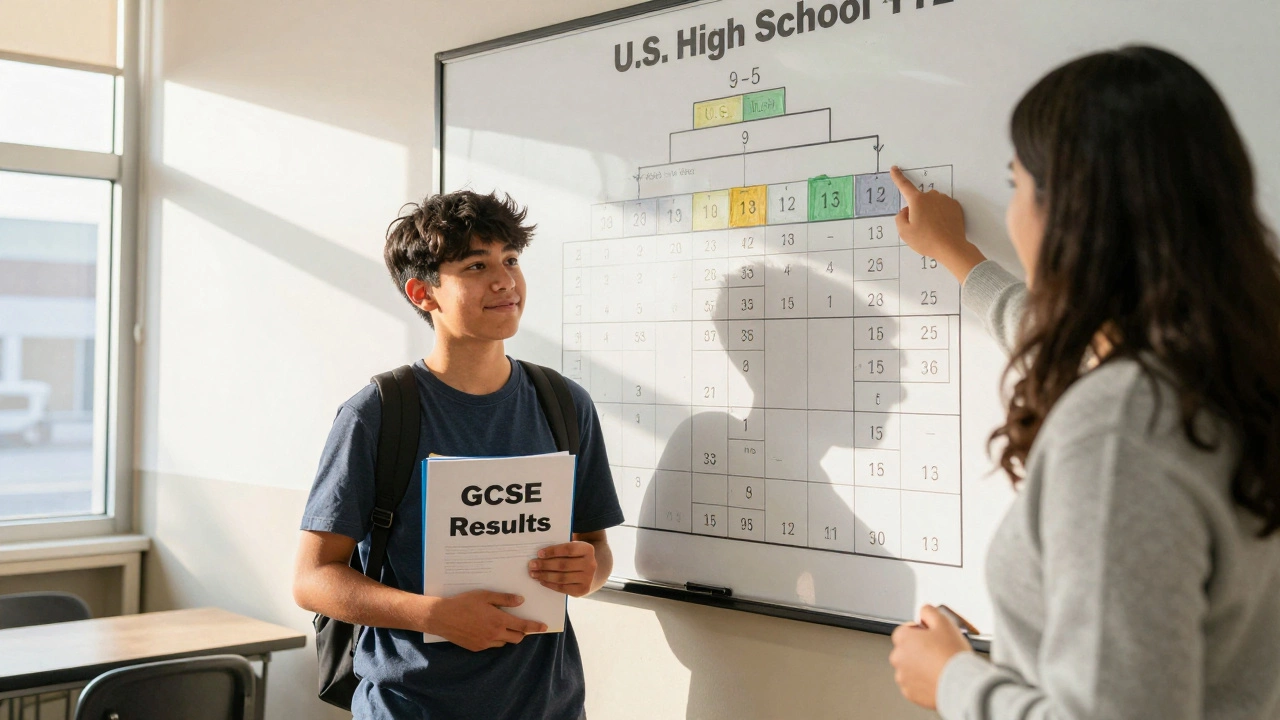
What Do U.S. Colleges Look For?
U.S. universities don’t require GCSEs. They expect a full high school diploma or its equivalent. That means:
- Completion of four years of English
- Three to four years of Math (including Algebra and Geometry)
- Three to four years of Science (Biology, Chemistry, Physics)
- Three years of Social Studies (History, Government, Economics)
- Two years of a Foreign Language
If you only have GCSEs, you’re missing the later years of high school - especially the advanced courses that U.S. colleges want to see. That’s why many international students enroll in a U.S. high school for 11th and 12th grade, or take the GED (General Educational Development) test after turning 16.
The GED is sometimes confused as a GCSE equivalent. It’s closer, but still not the same. The GED is a single test that covers five subjects. Passing it earns you a credential that’s legally recognized as a high school equivalent - but it doesn’t reflect the depth of coursework that a full U.S. diploma does.
Is There a Direct Path From GCSE to U.S. College?
Not directly - and that’s the biggest surprise for many students.
Most U.S. colleges won’t accept GCSEs alone for undergraduate admission. Even if you have top grades, you’ll still need:
- A full high school diploma or GED
- Standardized test scores (SAT or ACT)
- Proof of English proficiency (TOEFL or IELTS)
- Letters of recommendation and a personal statement
Some community colleges in the U.S. are more flexible. If you have GCSEs and are 16 or older, you might be able to enroll in remedial or college-prep courses. After one or two semesters, you can transfer to a four-year university - as long as you meet their GPA and course requirements.
There’s also the International Baccalaureate (IB) and Advanced Placement (AP) programs. These are offered in some international schools and are widely recognized by U.S. universities. If you’re planning ahead, taking AP courses alongside your GCSEs can help bridge the gap.
What If You’re an Adult With GCSEs?
If you’re an adult looking to work in the U.S. or return to education, your GCSEs still matter - but you’ll need to prove you’ve kept learning.
Many employers accept GCSEs as proof of basic literacy and numeracy, especially if you have work experience. For jobs that require a high school diploma, you may need to take the GED. It’s a faster route than going back to high school.
For college-bound adults, community colleges often offer adult education programs that help you earn credits equivalent to U.S. high school courses. Some even have bridge programs specifically for international students with GCSEs.
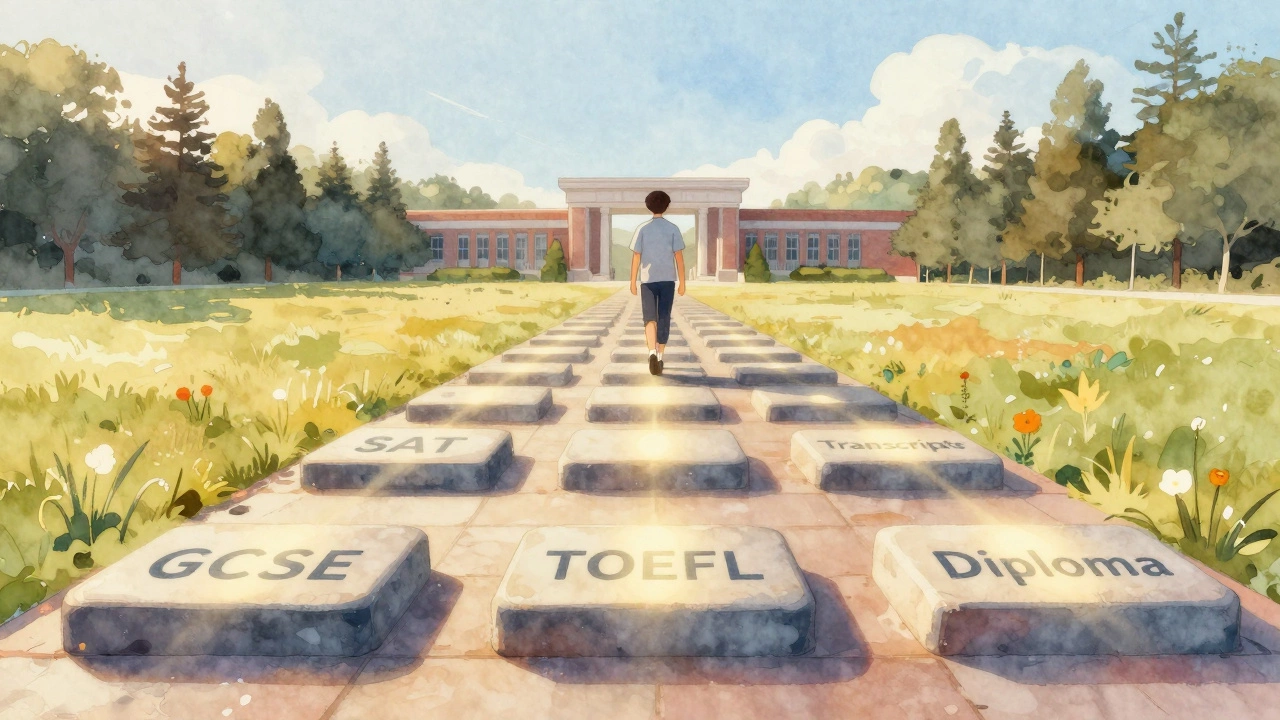
Bottom Line: GCSEs Are Part of the Story, Not the Whole Picture
GCSEs are a solid foundation - but they’re not the finish line in the U.S. system. Think of them as the first half of your high school journey. To be fully recognized in the U.S., you need to complete the second half.
If you’re planning to move to the U.S. for school, aim to finish at least two more years of academic study after your GCSEs. Take advanced courses, sit for standardized tests, and get your transcripts evaluated. That’s how you turn your GCSEs into something U.S. schools and employers will truly value.
What If You’re a Parent Helping Your Child?
Many UK parents assume their child’s GCSE results will be enough to get into a U.S. high school. They’re often shocked when schools ask for transcripts from years 10 and 11 - or require placement tests.
Start early. Contact the school district or private school you’re targeting. Ask what documentation they need. Most will want:
- Official GCSE certificates with grades
- Transcripts from year 9-11
- Proof of English fluency
- Standardized test scores (if available)
Some schools even require interviews or essays. Don’t wait until the last minute. The U.S. school year starts in August - applications for international students often close by March.
Is a GCSE the same as a U.S. high school diploma?
No. A GCSE is a subject-specific exam taken at age 16, while a U.S. high school diploma is earned after completing four years of coursework (grades 9-12). GCSEs are part of the journey, but not the full credential.
Can I use GCSEs to get into a U.S. college?
Not directly. U.S. colleges require a full high school diploma or its equivalent. GCSEs alone are not enough. You’ll need to complete additional coursework, take the SAT or ACT, and often provide English proficiency scores.
What’s the closest thing to GCSEs in the U.S.?
The closest equivalent is completing coursework in grades 9 and 10. GCSEs match the content and rigor of those two years, but not the full four-year diploma. Some U.S. schools may grant credit for GCSEs toward high school graduation requirements.
Do U.S. employers recognize GCSEs?
Yes - but only as evidence of basic education. For most jobs requiring a high school diploma, you’ll need to show a U.S. diploma or GED. GCSEs can help if you have work experience, but they’re rarely sufficient on their own.
Should I take the GED if I have GCSEs?
If you need a formal U.S. high school credential - for college, jobs, or immigration - then yes. The GED is widely accepted as equivalent to a diploma. It’s faster than going back to high school and can be taken after age 16.
Next Steps for Students and Families
- Get official transcripts from your school - including GCSE results and coursework details.
- Use a credential evaluation service like WES or ECE to convert your grades into U.S. terms.
- Plan to complete at least two more years of academic study after GCSEs - either in a U.S. high school, community college, or through online courses.
- Prepare for the SAT, ACT, or TOEFL if you’re applying to college.
- Contact schools early. Deadlines for international students are often months before domestic ones.
The U.S. system doesn’t make it easy to jump in from abroad - but it’s not impossible. With the right planning, your GCSEs can be the first step toward a full American education - not the end of the road.
Write a comment