

Stimming Purpose & Support Guide
Select a stimming behavior from the dropdown below to learn about its purpose, potential harm level, and appropriate support strategies.
Stimming isn’t something you see every day, but if you’ve ever noticed a child rocking back and forth, flapping their hands, or spinning in circles, you’ve likely seen stimming in action. It’s not a behavior to be stopped - it’s a natural way many people, especially those with autism, ADHD, or other neurodevelopmental differences, manage their emotions and sensory input. Stimming, short for self-stimulatory behavior, helps people calm down, focus, or express excitement when words aren’t enough.
What exactly is stimming?
Stimming refers to repetitive movements or sounds a person makes to regulate their nervous system. These actions aren’t random - they serve a purpose. For someone overwhelmed by noise, lights, or social pressure, stimming can feel like pressing a reset button. For someone under-stimulated, it can be a way to wake up their senses.
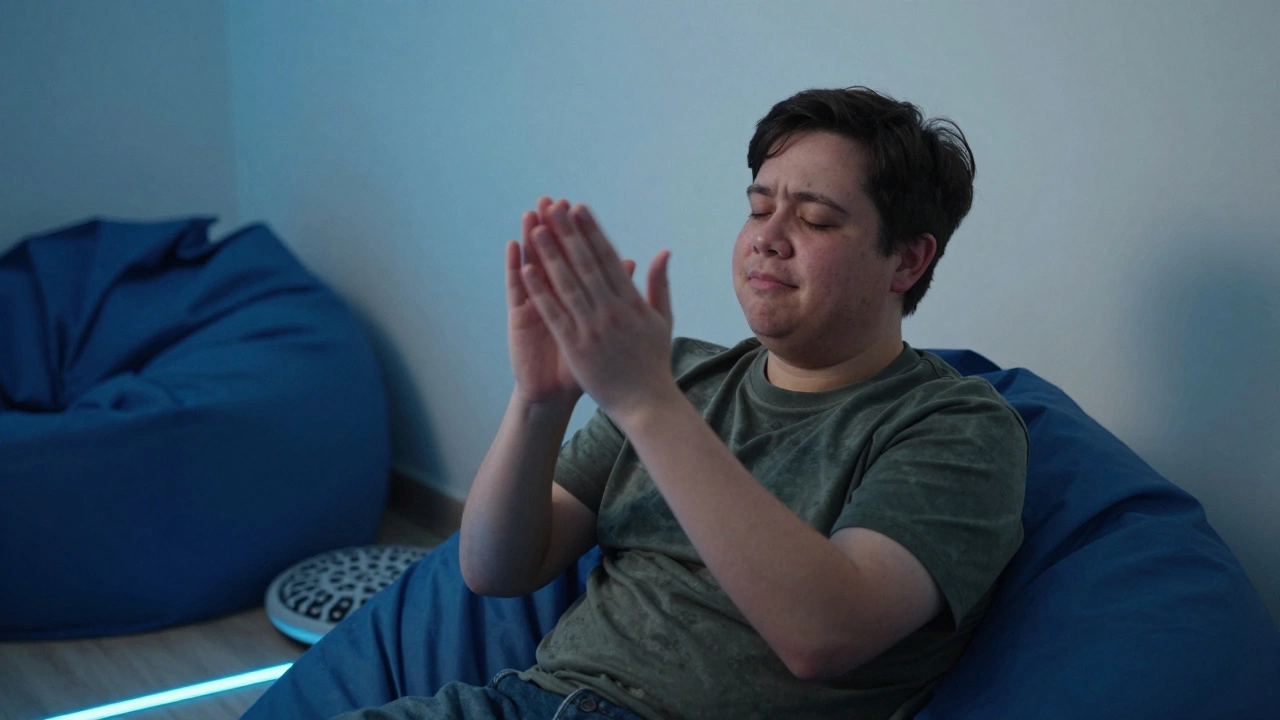
Think of it like tapping your foot while waiting in line or biting your nails when you’re anxious. Those are mild forms of stimming too. But for people with autism or sensory processing differences, stimming is often more intense and frequent. It might involve:
- Hand flapping or finger flicking
- Rocking back and forth
- Spinning objects or oneself
- Repeating words or sounds (echolalia)
- Snapping fingers
- Jumping or pacing
- Hair twirling or skin picking
- Humming, buzzing, or making vocal noises
These behaviors aren’t done to annoy others or seek attention. They’re deeply personal tools for staying grounded. A 2022 study from the Journal of Autism and Developmental Disorders found that 93% of autistic adults reported stimming as essential for emotional regulation, with 78% saying it helped them avoid meltdowns or shutdowns.
Why do people stim?
Stimming isn’t just about autism. People with ADHD, anxiety, PTSD, or sensory processing disorder also stim. But the reasons are always rooted in sensory or emotional needs:
- To calm down: Loud environments, bright lights, or crowded rooms can feel like sensory overload. Stimming helps reduce that noise in the brain.
- To focus: Some people stim to block out distractions. A child who taps their pencil might be concentrating harder than one who sits still.
- To express joy: Stimming isn’t always about stress. Many people flap their hands when they’re excited - think of a toddler jumping up and down seeing ice cream.
- To feel in control: When the world feels unpredictable, repetitive motion offers stability. It’s like holding onto a rhythm when everything else is chaotic.
- To release tension: Anxiety builds up physically. Stimming gives the body a safe outlet to let go.
One parent in Wellington shared that their 8-year-old son would spin in circles before bed. At first, they tried to stop it. Then they noticed he slept better afterward. Now, they call it his ‘wind-down ritual.’
Is stimming harmful?
Most stimming is harmless. Hand flapping, rocking, humming - none of these hurt anyone. But some forms can lead to injury or social isolation if they’re extreme or misunderstood.
Harmful stimming includes:
- Head banging that causes bruising or concussions
- Severe skin picking that leads to open wounds
- Self-biting or scratching until bleeding
If stimming is causing physical harm, it’s not about stopping the behavior - it’s about finding safer alternatives. A therapist might help replace head banging with a weighted blanket or vibrating cushion. The goal isn’t to eliminate stimming. It’s to make it safer.
What happens when stimming is stopped?
Too often, schools or caregivers try to stop stimming because it looks ‘weird’ or ‘disruptive.’ But forcing someone to stop is like asking someone to hold their breath until they pass out. The result? Increased anxiety, meltdowns, shutdowns, or emotional withdrawal.
A 2023 survey of 1,200 autistic adults found that 64% had been told to ‘stop that’ during childhood. Of those, 89% reported long-term shame or anxiety around their natural behaviors. One respondent wrote: ‘I spent years hiding my hand flapping. I thought I was broken. I wasn’t - I was just trying to survive.’
Instead of stopping stimming, educators and caregivers should:
- Observe when and why it happens
- Offer quiet spaces or sensory tools (fidget toys, noise-canceling headphones)
- Teach alternatives only if the current stim is dangerous
- Normalize it as part of neurodiversity
How schools and caregivers can support stimming
Special needs education isn’t about fixing people. It’s about creating environments where everyone can learn - including those who need to move, make noise, or stim to focus.
Here’s what works in real classrooms:
- Sensory corners: Quiet rooms with bean bags, weighted vests, or fidget stations let students regulate on their own.
- Flexible seating: Standing desks, wobble chairs, or therapy balls allow movement without distraction.
- Visual schedules: Predictability reduces anxiety, which reduces the need for intense stimming.
- Staff training: Teachers who understand stimming don’t see it as misbehavior - they see it as communication.
At a primary school in Dunedin, staff started using ‘stimming breaks’ - 2-minute windows where kids could move, jump, or hum without judgment. Within a month, classroom disruptions dropped by 40%.

Stimming and communication
Stimming is a form of nonverbal communication. When a child starts flapping wildly during a fire drill, they’re not being disruptive - they’re saying, ‘This is too loud.’ When someone rocks intensely after a conversation, they might be processing overload.
Instead of asking, ‘Why are you doing that?’ try asking, ‘What do you need right now?’ The answer might not come in words. But it will come in behavior.
Stimming isn’t a disorder - it’s a survival tool
Neurodiversity isn’t a trend. It’s science. The human brain doesn’t work the same way for everyone. Stimming is one of the clearest examples of how different brains adapt to survive in a world not built for them.
Imagine if every time you felt overwhelmed, you had to sit perfectly still. No tapping. No humming. No pacing. No deep breaths. How long would you last before you broke down?
Stimming isn’t something to cure. It’s something to understand. For many people, it’s the difference between a meltdown and a moment of peace. Between isolation and inclusion. Between silence and survival.
Is stimming only for autistic people?
No. While stimming is common in autism, it also occurs in people with ADHD, anxiety, PTSD, sensory processing disorder, and even neurotypical individuals. Everyone stims in some form - tapping a pen, biting nails, or pacing. The difference is intensity and frequency. Autistic people often stim more visibly and frequently because their nervous systems process sensory input differently.
Should I stop my child from stimming?
Only if the behavior is causing physical harm - like head banging or skin picking that leads to injury. Otherwise, trying to stop stimming can increase anxiety, lead to meltdowns, or damage self-esteem. Instead of stopping it, help your child find safer ways to stim if needed, and create environments where stimming is accepted.
Can stimming be replaced with something else?
Yes - but only if the original stim is harmful or socially limiting. For example, a child who bites their fingers might use a silicone chew toy. Someone who paces can use a rocking chair. The goal isn’t to eliminate stimming, but to offer alternatives that meet the same sensory need without risk. Never force a replacement - let the person choose what works.
Why do some people stim more than others?
It depends on sensory sensitivity, emotional regulation skills, and environment. Someone in a noisy, unpredictable setting will stim more than someone in a calm, structured one. Stress, fatigue, and trauma also increase stimming. It’s not about how ‘autistic’ someone is - it’s about how much their nervous system is being taxed.
Does stimming go away with age?
Sometimes, but not always. Many autistic adults continue to stim throughout life - often in quieter ways, like leg bouncing or finger tapping. Others find new outlets. The goal isn’t to make stimming disappear. It’s to help people feel safe doing it, whether they’re 5 or 50.
Write a comment