
Adults don’t learn like children. That’s not a judgment-it’s a fact backed by decades of research. If you’ve ever tried to teach an adult the same way you’d teach a teenager, you probably noticed the resistance, the boredom, or the quiet disengagement. It’s not that they’re hard to teach. It’s that they need something different.
Adults Need to Know Why
When you’re 18, you might sit through a math lecture because your teacher says so. When you’re 35, you’re not going to waste two hours on something unless you see how it connects to your life. Adult learners ask: Why does this matter to me?
That’s the first principle of adult education: relevance. Adults need to understand the purpose before they invest time or energy. A warehouse worker learning inventory software doesn’t care about the history of barcode systems. They care about how it cuts their shift time by 40 minutes. A parent returning to school doesn’t want to memorize grammar rules-they want to help their kid with homework without feeling embarrassed.
Without a clear ‘why,’ adult learners tune out. That’s why good adult education starts with context, not content.
Adults Learn by Doing
Adults aren’t fans of abstract theory unless it’s tied to real action. They learn best when they’re doing something-fixing, building, solving, applying.
Think about it: Would you rather read a 50-page manual on how to use a new phone, or just turn it on and start tapping? Most adults pick the second option. That’s why hands-on training beats lectures every time in adult learning environments.
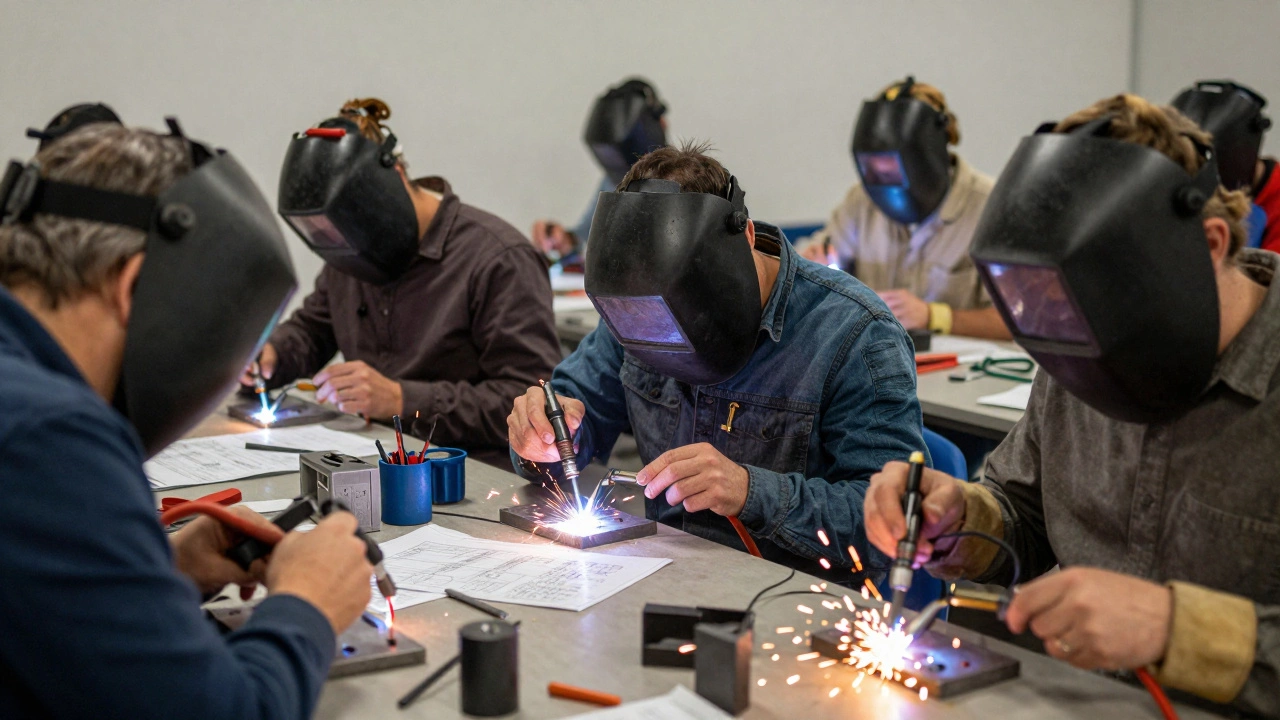
Community colleges teaching welding don’t start with diagrams. They hand out helmets and torches. Business courses don’t spend weeks on SWOT analysis-they have learners build a real business plan for a local café. Even online courses that work best for adults include simulations, role-plays, or real-world projects. Learning by doing sticks because it’s tied to experience, not memory.
Adults Bring Their Own Experience
Every adult learner walks in with a full life: past jobs, failed attempts, hard-won skills, personal losses, cultural habits. Their experience isn’t a distraction-it’s their greatest asset.
Traditional schooling treats learners as empty vessels. Adult education treats them as walking libraries. A nurse returning to school doesn’t just learn about new protocols-she compares them to what she’s seen on the floor. A veteran learning to code doesn’t just memorize syntax-he maps it to the problem-solving logic he used in the military.
Great adult educators don’t ignore experience. They tap into it. They ask: What’s worked for you before? What didn’t? They build lessons that connect new ideas to old ones. When learners see their own stories reflected in the material, learning becomes personal, not passive.

Adults Need to Be in Control
Adults hate being told what to do-especially when it comes to their own growth. They’ve spent years making decisions about careers, families, finances. They expect to have a say in how they learn too.
That’s why rigid schedules, one-size-fits-all curricula, and top-down instruction fail. Adult learners want choice: when to study, what to focus on, how to demonstrate mastery. Flexible deadlines, modular courses, and self-paced modules aren’t luxuries-they’re necessities.
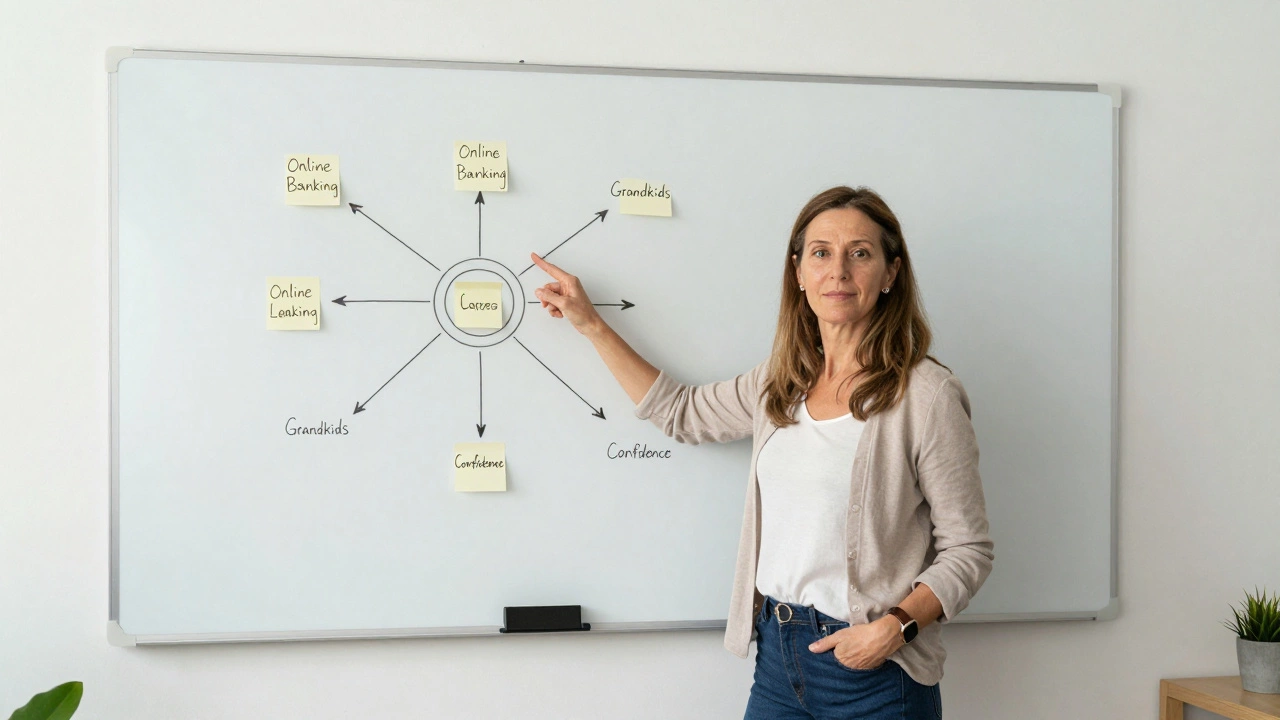
Programs that let learners pick their own projects, choose their assessment methods, or design their learning path see higher completion rates. A single mom taking a digital literacy course might skip the section on social media if she’s already comfortable with it and spend more time on online banking. That’s not laziness-it’s smart learning.
Adults Learn Best When They’re Motivated from Within
Children respond to grades, stickers, and parental pressure. Adults respond to internal drivers: the desire to get promoted, to feel more confident, to solve a problem, to prove something to themselves.
External rewards-like certificates or small bonuses-help, but they don’t sustain long-term effort. The real engine is personal motivation. Someone learning English to communicate with their grandchild will push through tough days. Someone taking a course because their boss said to will quit at the first hurdle.
Effective adult education doesn’t just teach skills-it connects those skills to personal goals. It asks: What do you want to become? Not What do you need to pass?
Adults Need Respect, Not Paternalism
Too many learning environments treat adult learners like they’re clueless. The tone is condescending. The materials are dumbed down. The instructor speaks as if they’re explaining how to tie shoes.
That doesn’t motivate. It humiliates.
Adults don’t need to be coddled. They need to be respected. That means using real-world examples, acknowledging their expertise, and treating them as equals. It means avoiding phrases like “as a beginner” or “this is simple.” It means letting them ask hard questions and not brushing them off.
Respect builds trust. Trust builds engagement. And engagement builds results.
Adult Learning Is Not a One-Time Event
Most adult learners aren’t trying to become experts overnight. They’re trying to improve slowly, steadily, over time. That’s why lifelong learning isn’t just a buzzword-it’s the reality.
Good adult education doesn’t end when the course ends. It builds habits: how to find reliable resources, how to ask for help, how to reflect on what was learned. It gives learners tools to keep going after the instructor is gone.
Think of it like teaching someone to fish. You don’t just hand them a fish-you give them a rod, show them where the water runs deep, and point out the seasons. Then you trust them to come back when they need more.
That’s the goal: not to fill heads with facts, but to build confident, self-directed learners who know how to keep growing.
Putting It All Together
These six principles-relevance, doing, experience, control, internal motivation, and respect-are the backbone of adult education. They’re not optional extras. They’re the difference between a course that fails and one that transforms.
When you design learning for adults, you’re not designing a program. You’re designing a partnership. You’re saying: Your time matters. Your experience matters. Your goals matter.
And when you do that, adults don’t just learn-they thrive.
What is the difference between pedagogy and andragogy?
Pedagogy is the method of teaching children, where the teacher controls the content, pace, and structure. Andragogy, developed by Malcolm Knowles, is the method of teaching adults. It’s based on the idea that adults are self-directed, bring life experience, and need to see the relevance of what they’re learning. In pedagogy, learning is often imposed. In andragogy, learning is invited.
Do adults learn slower than children?
No. Adults don’t learn slower-they learn differently. Children absorb information through repetition and memorization. Adults learn by connecting new ideas to existing knowledge. An adult might take longer to memorize a list of terms, but they’ll understand how those terms apply to real situations faster than a child. Speed isn’t the goal; depth and application are.
Why do so many adult learners drop out of courses?
The biggest reason is mismatched expectations. Many courses are designed for teenagers, not adults. They’re too rigid, too theoretical, or don’t connect to real life. Adults drop out when they feel their time is being wasted. The solution? Give them control, relevance, and respect. When learning feels like a chore, it gets dropped. When it feels like progress, people stick with it.
Can online learning work for adults?
Yes-but only if it follows adult learning principles. A passive video lecture with a quiz at the end won’t cut it. Successful online learning for adults includes real projects, peer discussions, flexible deadlines, and opportunities to apply skills immediately. Platforms like Coursera and LinkedIn Learning succeed because they let learners choose what to study, when to study, and how to prove they’ve learned it.
What role does technology play in adult education?
Technology is a tool, not a solution. It helps deliver content, track progress, and connect learners. But it doesn’t replace good teaching. A mobile app for learning Spanish won’t help if the learner doesn’t see how it connects to their goal of talking to their partner’s family. Technology supports adult learning-it doesn’t drive it.
Write a comment