

Special Needs Support Checklist
Identify Support Areas
Select characteristics you've observed in your child. This tool helps identify potential areas of support needs. It is not a diagnosis tool but can guide conversations with professionals.
Support Areas Identified
Select one or more symptoms to see results.
When we talk about special needs children, it’s not about labels-it’s about understanding how each child learns, moves, communicates, and interacts with the world. Every child is different, but in education and support systems, we group needs into four broad categories to make sure help reaches them in the right way. These aren’t rigid boxes. A child might fit into more than one, or their needs might change over time. But knowing these four types helps parents, teachers, and therapists design better support plans.
Learning Disabilities
Learning disabilities are invisible. A child with a learning disability might have average or above-average intelligence, but their brain processes information differently. This isn’t about laziness or poor teaching. It’s about how the brain takes in, stores, or uses language, numbers, or motor skills.
Dyslexia is the most common. Kids with dyslexia struggle with reading-letters flip, words blur, spelling feels impossible. Dyscalculia affects math. They might understand the concept of fractions in real life, like splitting a pizza, but freeze when seeing 3/4 on paper. Dysgraphia makes writing by hand painful or illegible. Their thoughts are clear, but their hand won’t cooperate.
These kids don’t need less work. They need different tools. Text-to-speech software, graph paper for math, voice-recorded notes, extra time on tests. In New Zealand, schools follow the Education and Training Act 2020, which requires reasonable accommodations. A child with a learning disability might get a learning support coordinator assigned to them. Their success isn’t measured by how fast they finish, but by how well they understand.
Autism Spectrum Disorder
Autism isn’t one thing. It’s a spectrum. Some children speak early and fluently. Others don’t speak at all. Some love routines and get upset if their lunch is served five minutes late. Others thrive on change. Some avoid eye contact. Others stare too long. All of them are valid.
What ties them together is how they experience the world. Sounds might be painfully loud. Lights might feel like needles. Social cues-like sarcasm, body language, or when to take a turn in conversation-are often invisible. They might not understand why someone is laughing or why a friend stopped talking to them.
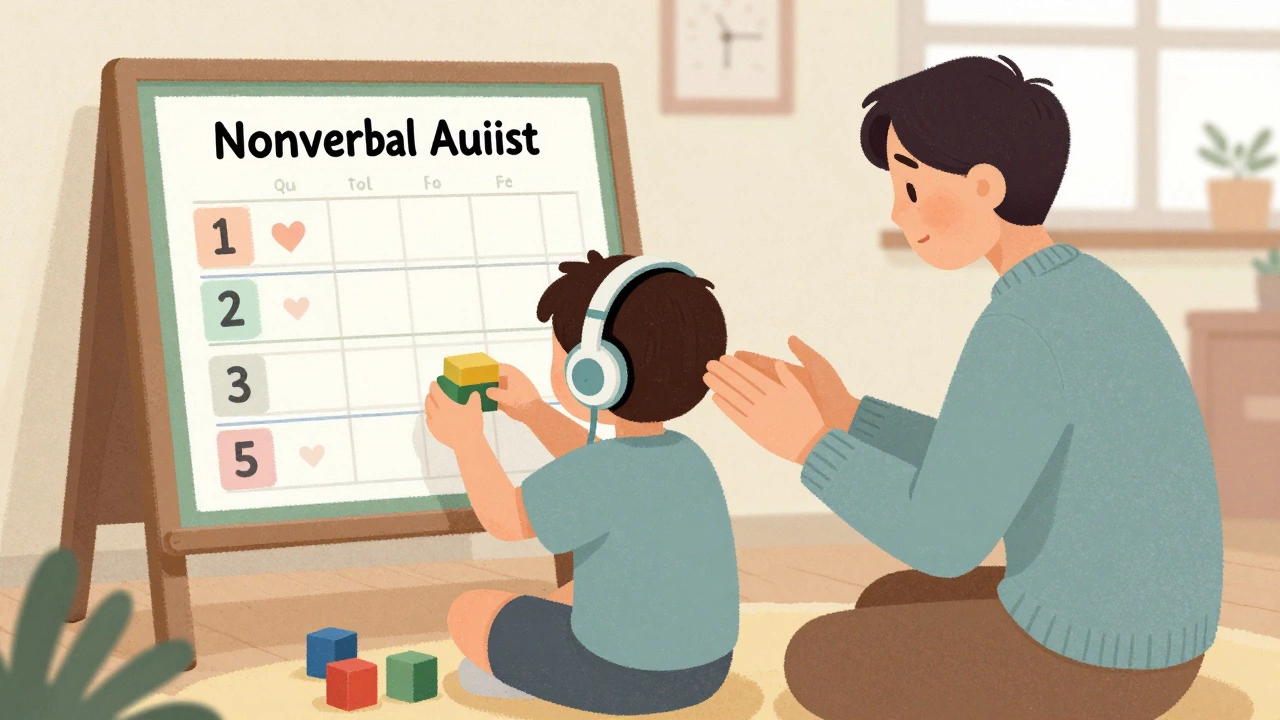
Support isn’t about fixing them. It’s about creating environments where they can thrive. Visual schedules help with transitions. Sensory-friendly classrooms reduce noise and bright lights. Social stories explain what to expect in new situations. Many schools now use TEACCH or ABA-based strategies, but the most effective support is individualized. One child needs quiet time after lunch. Another needs a peer buddy to help during group work. There’s no one-size-fits-all.
Developmental Delays
Developmental delays happen when a child doesn’t hit milestones at the expected time. These can be in speech, motor skills, social interaction, or problem-solving. A two-year-old who isn’t talking. A four-year-old who still can’t hold a crayon. A five-year-old who doesn’t play pretend games with other kids.
These delays aren’t always permanent. With early intervention, many children catch up. That’s why screening at ages 18 months and 3 years is so important. In New Zealand, the Early Intervention Service connects families with speech therapists, occupational therapists, and early childhood educators.
Some delays are mild and temporary. Others are signs of deeper conditions like global developmental delay or intellectual disability. The key is not to wait. If you notice your child isn’t meeting milestones, get them assessed. Early help means better outcomes. A child who gets speech therapy at age three might start talking clearly by five. A child who waits until six might need years of extra support.
Physical Disabilities
Physical disabilities affect movement, coordination, or bodily functions. This includes cerebral palsy, muscular dystrophy, spina bifida, limb differences, or conditions that require wheelchairs, braces, or feeding tubes.
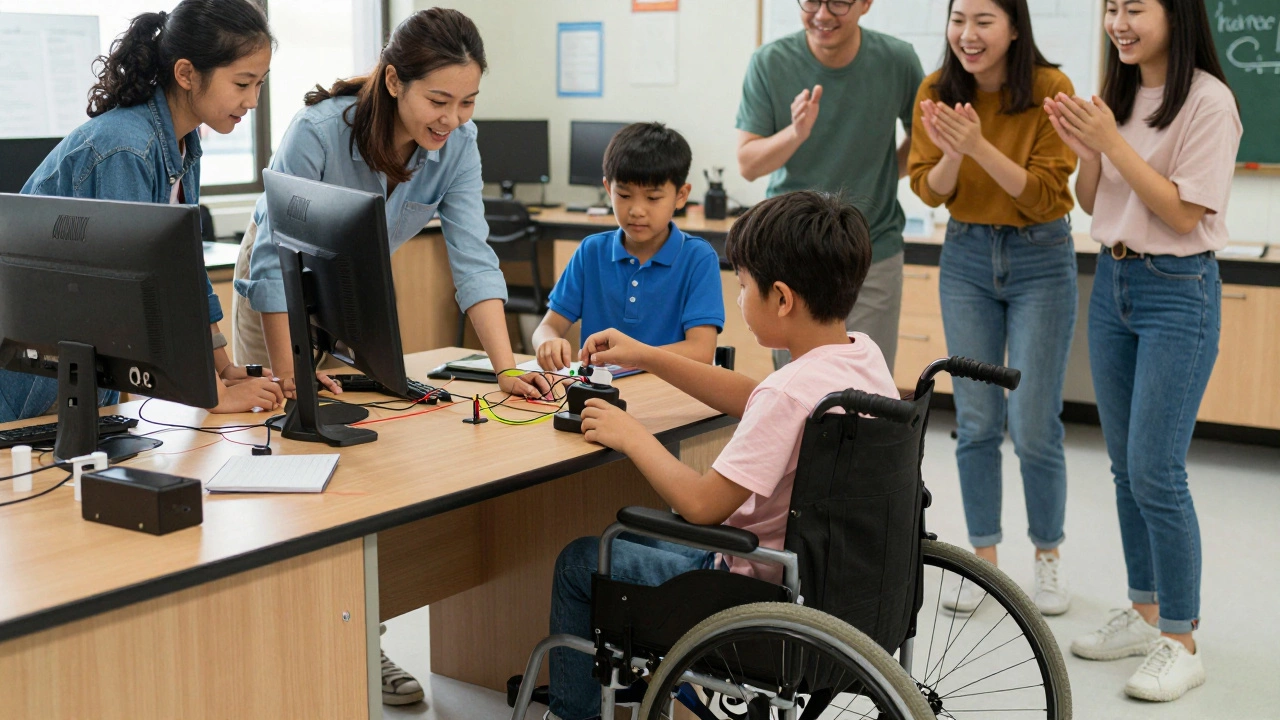
It’s easy to assume these children need only physical help. But their needs are wider. A child in a wheelchair needs ramps, accessible bathrooms, and desks at the right height. But they also need classmates who don’t stare, teachers who don’t assume they can’t answer questions, and activities that let them participate fully.
Technology plays a big role. Adaptive keyboards, voice-controlled devices, and switch-operated toys open doors. Schools in Wellington and elsewhere are slowly becoming more inclusive. But access isn’t automatic. Parents often have to fight for equipment, trained staff, or even permission for their child to join field trips.
The goal isn’t just physical access. It’s social inclusion. A child with a physical disability should be able to play tag during recess, not just watch. They should be asked to join group projects, not sidelined because it’s "easier" for everyone else.
Why These Categories Matter
These four types-learning disabilities, autism spectrum disorder, developmental delays, and physical disabilities-are the foundation of special needs education. They help schools allocate resources, train staff, and design classrooms. But they’re not meant to box children in.
Many children have overlapping needs. A child with autism might also have a learning disability. A child with cerebral palsy might have a speech delay. That’s why individualized education plans (IEPs) are so important. An IEP isn’t paperwork. It’s a living plan. It gets reviewed every six months. Goals change. Strategies shift. What worked last year might not work now.
The biggest mistake? Assuming that special needs means less ability. It doesn’t. It means different ways of learning. A child with dyslexia might be a brilliant storyteller. A nonverbal autistic child might solve complex puzzles in seconds. A child in a wheelchair might lead a science project with unmatched creativity.
What every child needs isn’t a label. It’s a chance. A chance to be seen, heard, and supported-not fixed.
What Comes Next
If you’re a parent wondering where to start, here’s what works:
- Get an assessment. Talk to your GP, pediatrician, or school’s learning support team. Don’t wait for a "red flag." Trust your gut.
- Know your rights. In New Zealand, every child has the right to free, appropriate education. That includes accommodations.
- Connect with other families. Groups like Autism New Zealand or Disability Rights Advocacy offer peer support and practical advice.
- Focus on strengths. What does your child love? What are they good at? Build from there.
- Advocate, but don’t burn out. You’re not alone. Schools have support staff. You just have to ask.
There’s no perfect path. But there are good ones. And they start with understanding-not pity, not fear, but real understanding.
Are learning disabilities the same as intellectual disabilities?
No. Learning disabilities affect how a person processes specific types of information-like reading, writing, or math-but don’t lower overall intelligence. A child with dyslexia can have a high IQ. Intellectual disabilities involve broader challenges in thinking, reasoning, and daily living skills, often with lower IQ scores. One is about how you learn; the other is about how much you can learn.
Can a child outgrow a developmental delay?
Yes, many can-especially with early support. A child who isn’t talking at age two might be speaking in full sentences by age four after speech therapy. Delays aren’t always permanent. But if a delay continues past age five without improvement, it may signal a more lasting condition. That’s why early screening is so critical.
Do all children with autism need ABA therapy?
No. ABA (Applied Behavior Analysis) is one approach, but it’s not the only one-and not always the best. Some families find it helpful. Others find it too rigid or even harmful. Many schools now use positive behavior support, social skills groups, or play-based therapy instead. The key is to choose what fits your child’s personality and needs, not what’s popular.
Is special education only for kids in mainstream schools?
No. Special education services are available in mainstream schools, special schools, home-based programs, and even hospitals. In New Zealand, the Ministry of Education funds support based on need-not location. A child with a physical disability might get a teaching assistant in a regular classroom. Another might attend a specialist school with smaller classes and therapists on-site. Both are valid options.
How do I know if my child needs an IEP?
If your child is struggling in school despite extra help-if they’re falling behind, avoiding tasks, or showing signs of frustration-you should ask for an assessment. An IEP isn’t just for diagnosed conditions. It’s for any child who needs adjustments to learn effectively. Teachers, parents, and specialists work together to create it. You don’t need a doctor’s note to start the process.
Write a comment