

ADHD Functional Impact Calculator
How ADHD Impacts Learning
This tool helps identify how ADHD affects a child's daily functioning based on real-world observations. Remember: This is NOT a diagnosis, but a practical assessment of functional impact.
There are no official "five levels of ADHD" in medical or educational guidelines. If you’ve heard this phrase, it’s likely coming from online forums, parenting blogs, or oversimplified summaries - not from the DSM-5, WHO, or any major health organization. But here’s the real question behind the question: How do professionals actually describe how ADHD affects different kids - and what does that mean for classroom support?
ADHD Isn’t a One-Size-Fits-All Diagnosis
ADHD - Attention-Deficit/Hyperactivity Disorder - is diagnosed based on a pattern of symptoms that last at least six months and show up in more than one setting, like home and school. The DSM-5, the manual doctors use to diagnose mental health conditions, doesn’t rank ADHD into levels. Instead, it classifies it by presentation: predominantly inattentive, predominantly hyperactive-impulsive, or combined. That’s it.
But here’s what schools and clinicians see every day: two kids with the same diagnosis can need completely different support. One might zone out during lessons but sit quietly. Another might blur through work, interrupt constantly, and struggle to finish tasks. One needs noise-canceling headphones. The other needs movement breaks every 15 minutes. That’s why people start talking about "levels" - not because the science says so, but because real life doesn’t fit neatly into boxes.
What People Really Mean by "Levels" of ADHD
When educators or parents talk about "mild," "moderate," or "severe" ADHD, they’re not using clinical terms - they’re describing functional impact. Think of it like vision: you can have 20/20 sight, need glasses for reading, or be legally blind. All are vision issues, but the support needed changes drastically.
In special needs education, we often see ADHD symptoms grouped by how much they interfere with learning, social interaction, and daily routines. Here’s how that breaks down in practice:
- Minimal impact - Symptoms are present but rarely disrupt learning. The child might forget homework once a week or fidget during long lectures. With minor accommodations - like a visual schedule or a quiet corner - they thrive without formal support.
- Mild impact - Inattention or impulsivity shows up regularly in class. The child misses instructions, interrupts peers, or loses materials. They may need weekly check-ins with a teacher or a daily behavior chart. No formal IEP is needed, but a 504 Plan often helps.
- Moderate impact - Learning is consistently disrupted. The child struggles to complete tasks, has frequent meltdowns over transitions, or is socially isolated due to interrupting or blurting out answers. They typically qualify for an IEP. Support includes structured routines, extended time, and access to a learning support assistant.
- Severe impact - ADHD symptoms are paired with emotional dysregulation, oppositional behavior, or co-occurring conditions like anxiety or dyslexia. The child may refuse to attend school, have violent outbursts, or be unable to sit through a 30-minute lesson. They need intensive, individualized interventions - often involving a behavior specialist, occupational therapy, and collaboration with a child psychologist.
- Complex presentation - This isn’t just "severe ADHD." It’s ADHD layered with autism, trauma, speech delays, or intellectual disability. The child may not speak, use sensory tools to self-regulate, or need a one-to-one aide full-time. Their education plan isn’t just about focus - it’s about survival, safety, and communication.
Why the "Five Levels" Idea Persists
Parents and teachers need simple ways to talk about complex issues. Saying "my child has level 3 ADHD" feels easier than explaining that their executive functioning is delayed by 3-4 years, they have poor working memory, and their emotional responses are triggered by auditory overload.
Also, schools use tiered support systems - like Response to Intervention (RTI) - which have three tiers. Some people misread those tiers as levels of ADHD. But RTI is about how much help a student gets, not how "bad" their ADHD is. A child with mild ADHD might need Tier 3 support if they’re also dealing with family stress or language barriers.
The danger? Labeling ADHD as "levels" can lead to under-support. If a child is labeled "mild," teachers might assume they don’t need help - even if they’re failing math because they can’t remember multi-step instructions. Or worse, a child with complex needs might be pushed into a "severe" box and denied opportunities because people assume they can’t learn.
What Really Matters: Functional Needs, Not Labels
Instead of asking "What level is my child’s ADHD?" ask these questions:
- When does their focus break down - during group work, quiet reading, or transitions?
- What helps them reset? Movement? Noise-canceling headphones? A five-minute walk?
- Do they understand instructions when given verbally, or do they need them written down?
- Are they being punished for symptoms they can’t control - like fidgeting or blurting?
These questions point to real solutions. A child who can’t sit still might need a wobble cushion. One who forgets homework might benefit from a digital reminder app synced to their phone and their parent’s. A child who melts down after lunch might need a quiet space to decompress - not a detention.
Research from the University of Auckland’s Special Education Centre (2024) tracked 120 students with ADHD over two years. Those who received support based on their individual functional needs - not diagnostic labels - showed 40% more improvement in academic engagement than those whose support was based on broad categories like "mild" or "severe."
How Schools Can Get This Right
Good special education doesn’t start with a diagnosis. It starts with observation. Teachers who notice patterns - not just behaviors - make the biggest difference.
For example:
- Is the child only distracted during math? Maybe they have a math anxiety issue, not just ADHD.
- Do they do well one-on-one but crash in groups? That’s not defiance - it’s sensory overload.
- Do they rush through work and make careless errors? That’s not laziness - it’s impulsivity linked to poor self-monitoring.
Classroom strategies that work for all levels of ADHD:
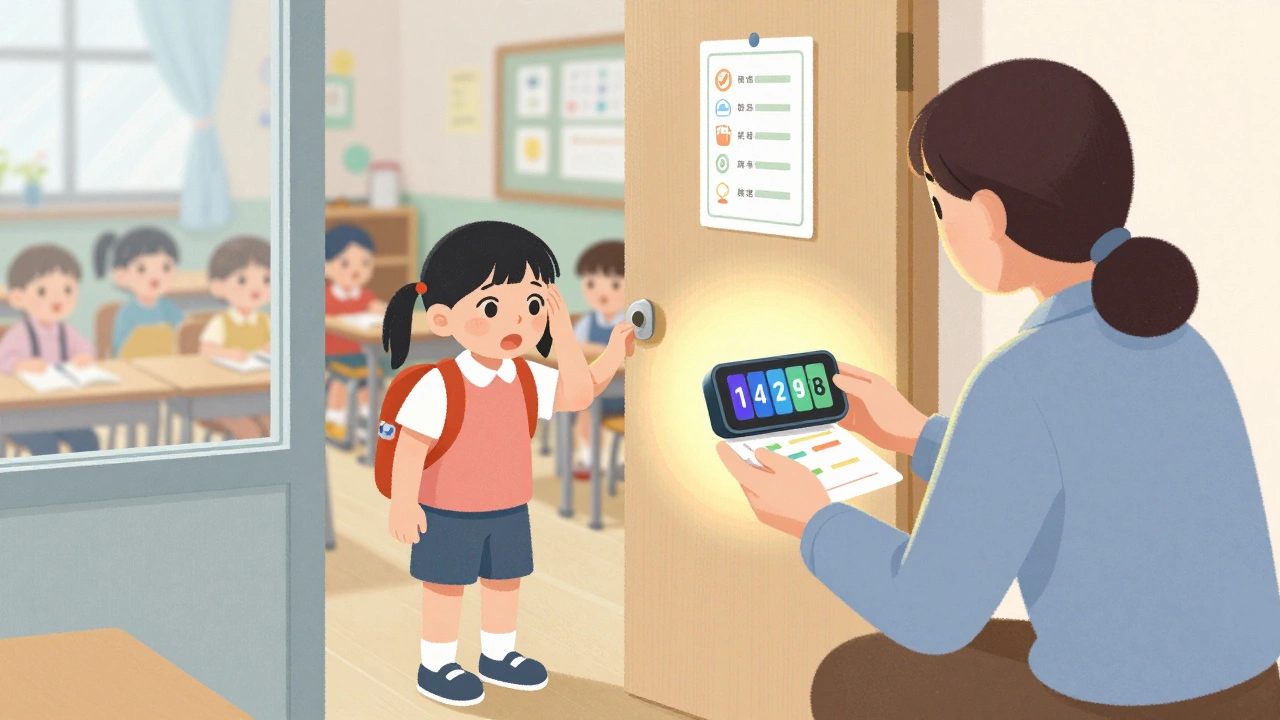
- Break tasks into micro-steps with visual checklists
- Use timers for transitions - not just "five minutes left," but a visual countdown
- Give choices: "Do you want to start with math or reading?"
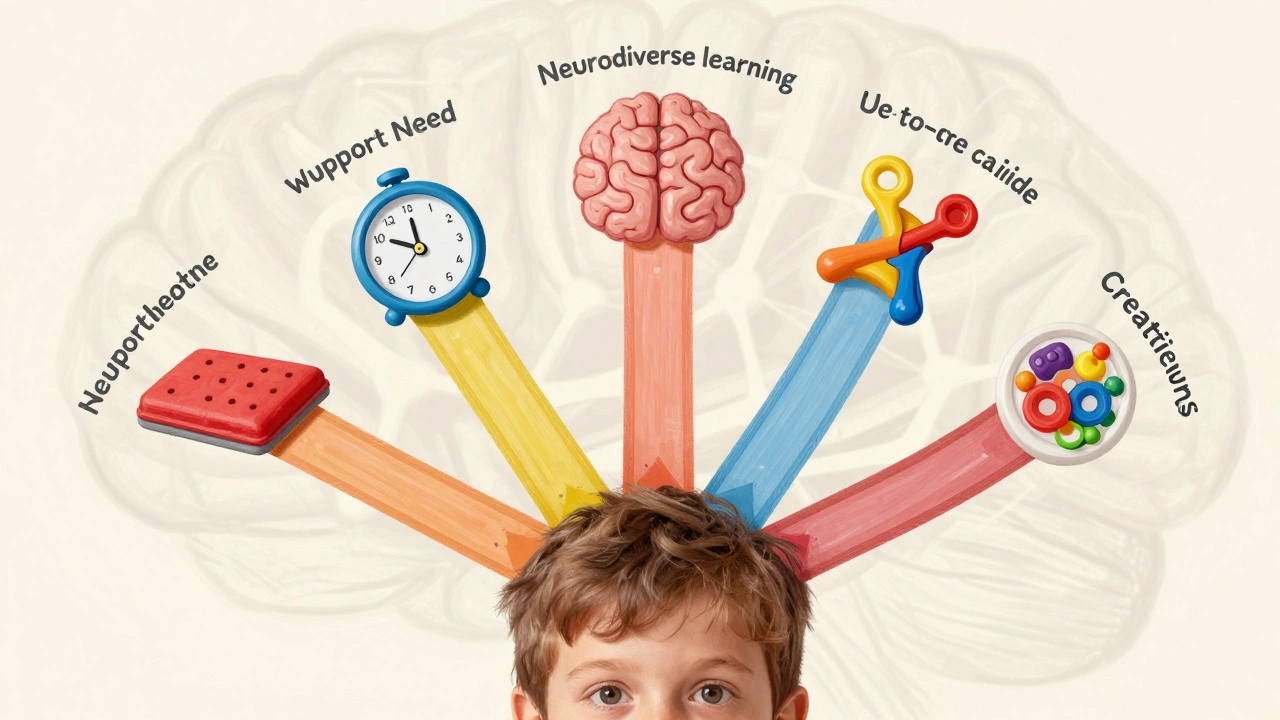
- Allow movement - standing desks, walking to deliver papers, fidget tools
- Reduce verbal instructions - pair them with written or pictorial cues
And never assume a child is "just being bad." ADHD is a neurological difference, not a character flaw. The brain of someone with ADHD doesn’t lack willpower - it lacks efficient pathways for attention, impulse control, and task initiation.
What Parents Should Do
If you’re worried about your child’s attention and behavior:
- Keep a behavior log: note when, where, and what triggers meltdowns or zoning out
- Ask the teacher: "What does my child do when they’re successful?" - not just "What’s wrong?"
- Request a school-based evaluation - you don’t need a private diagnosis to start support
- Focus on strengths: many kids with ADHD are creative, energetic, and great at thinking outside the box
Don’t wait for a label. Support can - and should - begin before a formal diagnosis.
Final Thought: ADHD Is a Spectrum of Needs, Not Levels
There are no five levels of ADHD. But there are five thousand different ways ADHD shows up in classrooms. The goal isn’t to sort kids into boxes. It’s to see the child behind the behavior - and give them the tools they actually need to learn, belong, and thrive.
What works for one child might not work for another - and that’s okay. The best support isn’t labeled. It’s personalized.
Are there official levels of ADHD like mild, moderate, and severe?
No. The DSM-5 and WHO don’t classify ADHD into levels. Instead, they describe three presentations: inattentive, hyperactive-impulsive, or combined. Terms like "mild" or "severe" are used informally by educators and parents to describe how much the symptoms affect daily life - not as clinical categories.
Can a child with ADHD get support without a formal diagnosis?
Yes. Schools can provide support through a 504 Plan or informal accommodations based on observed needs. You don’t need a medical diagnosis to start helping a child who struggles with focus, organization, or impulse control. Teachers and special education teams can begin interventions as soon as patterns are noticed.
What’s the difference between an IEP and a 504 Plan for ADHD?
An IEP (Individualized Education Program) is for students who need specialized instruction because their disability affects their learning. A 504 Plan provides accommodations - like extra time or preferential seating - but doesn’t include specialized teaching. Most children with ADHD qualify for a 504 Plan. An IEP is needed if they also have learning disabilities or require direct intervention.
Do ADHD symptoms get worse with age?
Not necessarily. Hyperactivity often decreases in adolescence, but inattention and disorganization can persist or even increase as academic demands grow. Many teens with ADHD struggle more in high school because they’re expected to manage time, materials, and tasks independently - skills their brains haven’t fully developed yet.
Is ADHD just a result of poor discipline or too much screen time?
No. ADHD is a neurodevelopmental disorder with strong genetic and biological roots. While screen time and inconsistent routines can make symptoms harder to manage, they don’t cause ADHD. Blaming parenting or technology ignores the science: brain imaging shows differences in attention networks and dopamine regulation in people with ADHD.
Can kids with ADHD succeed in school?
Absolutely. With the right support - structure, accommodations, and understanding - children with ADHD can excel. Many top entrepreneurs, artists, and scientists have ADHD. Their ability to think creatively, take risks, and hyperfocus on passions they care about can be huge strengths - when the environment lets them shine.
Write a comment