

Learning Disability Symptom Checker
This tool helps identify potential indicators of common learning disabilities. Answer the questions honestly to see which condition's symptoms align most closely with your experiences. Note: This is not a diagnostic tool. Professional evaluation is required for official diagnosis.
Your Results
Key indicators:
Learning disabilities aren’t about intelligence. They’re about how the brain processes information. A child with a learning disability might struggle with reading, writing, or math-not because they’re not trying, but because their brain works differently. These challenges show up early, often in elementary school, and they don’t go away on their own. But they can be managed with the right support. Three common conditions linked to learning disabilities are dyslexia, dyscalculia, and dysgraphia. Each one affects learning in its own way, and knowing the signs makes a big difference.
Dyslexia: The Reading Challenge
Dyslexia is the most well-known learning disability. It affects how the brain turns letters into sounds. Kids with dyslexia might reverse letters like b and d, skip words while reading, or read slowly even when they understand the material. They often have strong verbal skills-can explain a story in detail after hearing it-but freeze when asked to read it out loud. This isn’t laziness. It’s a neurological difference. A 2023 study from the National Institute of Child Health and Human Development found that 15-20% of the population has some level of dyslexia. That’s roughly one in every five students. Many go undiagnosed because they’re labeled as "not trying hard enough." But with structured literacy programs-like Orton-Gillingham-students can learn to decode text. Tools like audiobooks and speech-to-text software help too. The goal isn’t to fix them. It’s to give them the right path to learn.
Dyscalculia: The Math Struggle
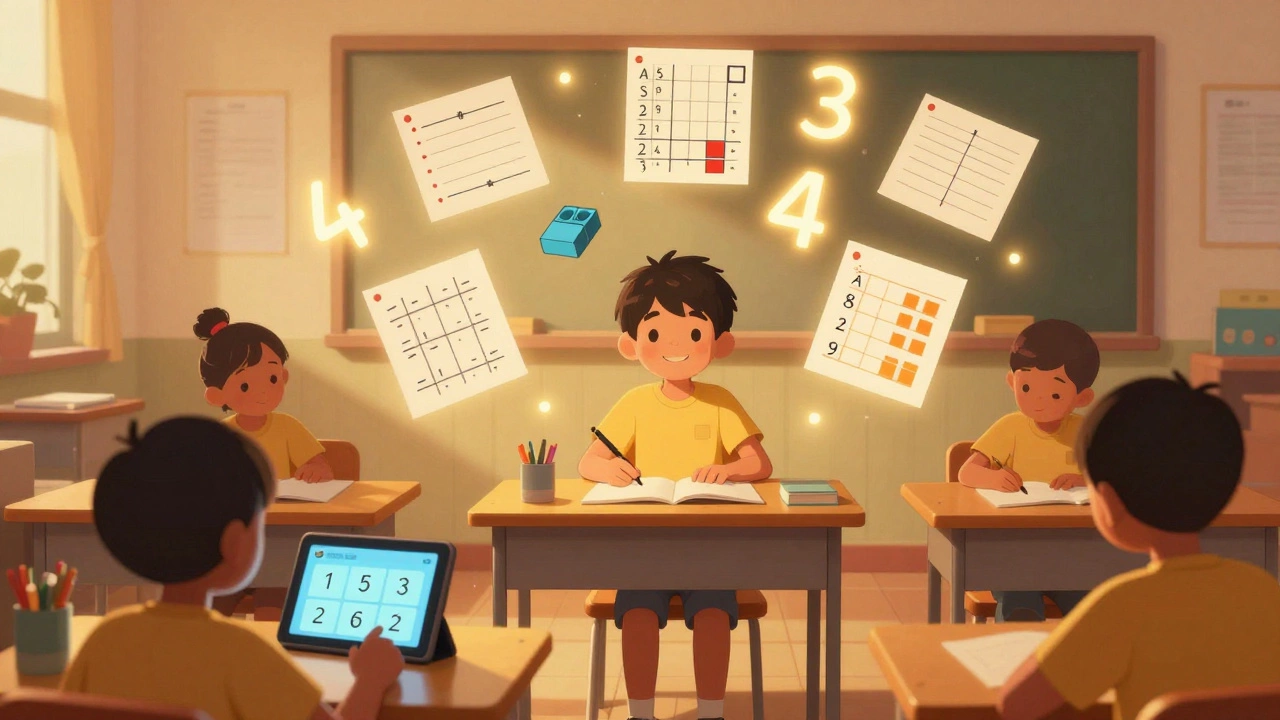
If a child can’t seem to grasp basic math, even after repeated practice, dyscalculia might be the reason. It’s not just "being bad at math." Dyscalculia makes it hard to understand number sense-like knowing that 7 is bigger than 5 without counting. Kids with this condition struggle with telling time, counting money, estimating distances, or remembering math facts. They might count on their fingers long after peers have moved on. A 2022 meta-analysis in the Journal of Learning Disabilities showed that 3-6% of school-age children have dyscalculia, and it often goes unnoticed because schools focus more on reading. Unlike dyslexia, there’s less public awareness. But the tools exist. Visual aids, number lines, manipulatives like base-ten blocks, and apps like Moose Math help build concrete understanding. Teachers who use multisensory math instruction see better results. The key is recognizing that math isn’t a one-size-fits-all subject.
Dysgraphia: The Writing Barrier
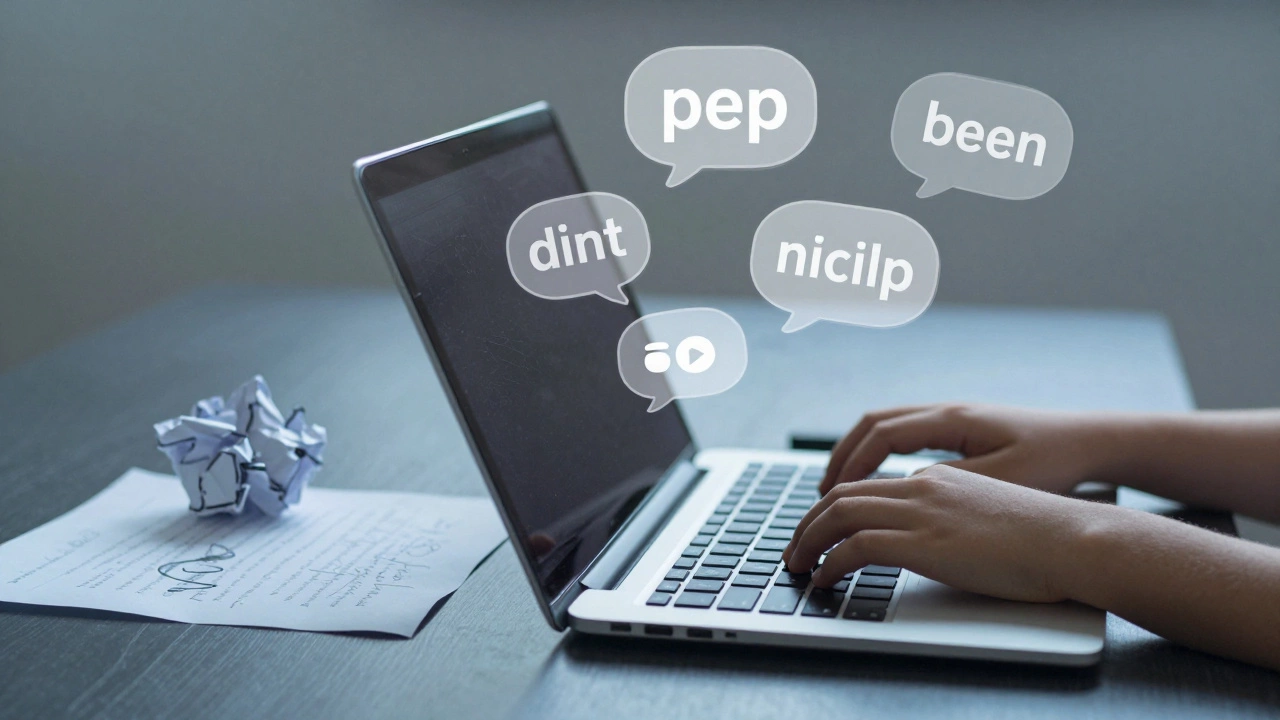
Dysgraphia affects writing-not just handwriting, but the whole process of getting thoughts onto paper. A child with dysgraphia might hold a pencil too tightly, write slowly, mix upper and lowercase letters, or leave out punctuation. Their ideas are clear in their head, but the physical act of writing feels overwhelming. Spelling is often messy, and organizing sentences into paragraphs can feel impossible. A 2024 study from the University of Minnesota found that 7% of children in mainstream classrooms show clear signs of dysgraphia. Many are mislabeled as "careless" or "unfocused." But the issue isn’t motivation-it’s motor planning and spatial awareness. Occupational therapy helps with fine motor skills, but classroom accommodations make the biggest difference. Letting students type instead of write by hand, using graphic organizers, and allowing oral responses instead of written essays can level the playing field. Writing isn’t the only way to show what you know.
Why These Three Matter
These three conditions-dyslexia, dyscalculia, and dysgraphia-are the most common, but they’re not the only ones. Other issues like auditory processing disorder or nonverbal learning disability can also affect learning. But if you know these three, you’re already ahead. They’re the ones teachers see most often, and they’re the ones most likely to be missed without training. The real problem isn’t the disability itself. It’s the assumption that if a child struggles, they’re not trying. That’s false. These kids are trying harder than most. They’re working twice as hard just to keep up. And without the right tools, they fall behind-not because they can’t learn, but because the system didn’t adapt to how they learn.
What Helps? The Simple Truth
There’s no magic cure. But there are proven strategies. First, early identification matters. If a child is still reversing letters in third grade, or can’t remember multiplication tables by fourth, it’s time to look deeper than "just needs practice." Second, accommodations aren’t favors-they’re necessities. A child with dyslexia doesn’t "get" audiobooks as a bonus. They need them to access the same content as their peers. Third, teachers and parents need training. Most educators weren’t taught how to spot these signs in college. That’s changing, but slowly. Parent advocacy groups, like the International Dyslexia Association, offer free workshops. Schools that use Response to Intervention (RTI) models catch issues earlier. And technology? It’s not a crutch. It’s a bridge. Text-to-speech, speech-to-text, math apps, visual organizers-they’re not optional extras. They’re part of the curriculum now.
Real-Life Impact
Imagine a 9-year-old who loves science but can’t read the textbook. Or a 12-year-old who can solve complex logic puzzles but breaks down when asked to write a paragraph. These aren’t rare cases. They’re everyday students. One parent shared that her son, diagnosed with dysgraphia at age eight, stopped talking in class because he was ashamed of his handwriting. After switching to typing assignments and using voice notes for essays, he went from Ds to As in social studies. He’s now in middle school, writing podcasts about space exploration. His brain didn’t change. The way he was allowed to show what he knew did.
What to Do Next
If you suspect a learning disability, don’t wait. Talk to the school. Request an evaluation. You don’t need a doctor’s note to start the process. Public schools are required to assess students at no cost if there’s reason to believe they have a learning difference. Keep records. Note when struggles started, what helps, what doesn’t. Talk to other parents. Join online communities. And remember: learning disabilities aren’t labels. They’re maps. They show where the road is rough-and where the detours are.
Are learning disabilities the same as intellectual disabilities?
No. Learning disabilities affect specific areas like reading, writing, or math, but the person’s overall intelligence is typically average or above average. Intellectual disabilities involve broader challenges in reasoning, problem-solving, and daily living skills across multiple areas. A child with dyslexia can be brilliant in science or art-just struggles with text.
Can a child outgrow a learning disability?
No, learning disabilities are lifelong. But with the right support, people learn to work around them. Think of it like wearing glasses. You don’t outgrow nearsightedness, but you can see clearly with the right tools. Same with learning disabilities. Strategies, accommodations, and technology help people succeed-even thrive.
Is dyslexia just seeing letters backwards?
Not really. While some kids with dyslexia reverse letters, that’s not the core issue. Dyslexia is about difficulty connecting sounds to letters. It’s not a vision problem. It’s a language processing issue. Many kids with dyslexia never reverse letters at all. The real sign is slow, inaccurate reading-even when they understand the material perfectly.
Do learning disabilities only affect schoolwork?
No. They can affect daily life too. Telling time, following directions, organizing tasks, remembering appointments-all can be harder. A teenager with dyscalculia might struggle to split a bill. An adult with dysgraphia might avoid writing emails. These aren’t "laziness" or "poor time management." They’re symptoms of the same neurological differences that show up in school.
Can technology help students with learning disabilities?
Yes, and it’s often essential. Text-to-speech tools help with reading. Speech-to-text helps with writing. Apps like MathTalk or Dyscalculia Toolkit provide visual, hands-on ways to learn math. These aren’t "cheats." They’re equalizers. Just like a wheelchair gives mobility, these tools give access. Schools that ignore them are blocking learning.
Write a comment