

Online School Readiness Checker
Answer these questions honestly to get a personalized recommendation. This tool is based on common factors affecting success in remote learning environments.
1. How does your child handle unstructured time?
2. What is your current work/life situation regarding supervision?
3. How would you describe your child's social needs?
4. Does your child learn better at their own pace?
5. Do you have a dedicated quiet workspace at home?
Your Score: /15
You’re staring at the laptop screen. Your kid is in their pajamas at 10 AM, looking bored, frustrated, or maybe just completely checked out. The question hits you hard: Should I let my kid do online school? It’s not just about convenience anymore. It’s about whether this model actually works for your child’s brain, your family’s schedule, and their future social skills.
Here’s the truth nobody tells you upfront: online school isn’t inherently better or worse than traditional schooling. It’s a tool. And like any tool, it depends entirely on who is holding it and what they are trying to build. If you are in Wellington or anywhere else dealing with traffic, weather, or just the chaos of modern parenting, the appeal is obvious. But before you sign up for another semester of distance learning, you need to look past the marketing brochures and assess the real-world impact on your child.
The Real Deal With Social Skills
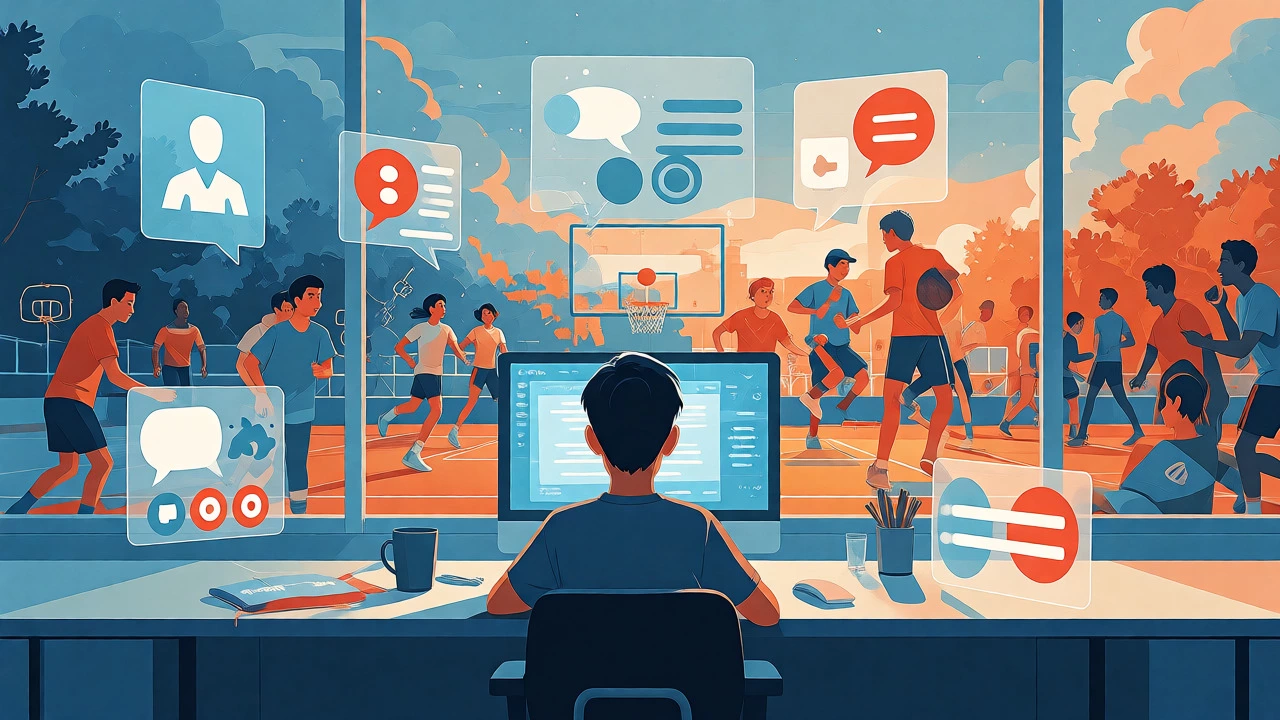
Let’s tackle the elephant in the room first. Parents worry most about isolation. They picture their kids becoming hermits, missing out on the playground politics that shape character. Is this fear valid? Partially. But it’s often overstated if you approach it strategically.
In a traditional classroom, socialization happens by default. You sit next to whoever the school assigned you. In online school, socialization becomes intentional. This is a crucial distinction. When kids learn to connect online, they are practicing digital literacy and communication skills that are increasingly vital in the workforce. However, these virtual interactions rarely replace the physical nuance of face-to-face play. If you choose online schooling, you must become the architect of their social life. You aren’t off the hook; you are promoted to social director.
This means organizing local meetups, joining sports clubs, or enrolling them in weekend arts classes. The goal isn’t to replicate school recess digitally; it’s to ensure they have a community outside the screen. If your child struggles with reading body language or making friends without a structured prompt, online school might exacerbate those challenges unless you actively intervene.
Assessing Your Child’s Self-Discipline
Not every kid is built for the freedom of remote learning. Traditional schools provide external structure: bells ring, teachers hover, peers watch. Online school removes those guardrails. Does your child have the internal engine to drive themselves forward?
Think about how they handle homework right now. Do they procrastinate until the last minute? Do they need constant reminders to start tasks? If yes, remote education might be a disaster zone initially. These students often thrive under direct supervision because they haven’t yet developed the executive function to manage time independently.
Conversely, some children feel stifled by the rigid pace of a classroom. Maybe they grasp math concepts quickly but get held back while others catch up. Or perhaps they are deep thinkers who need quiet time to process information, which noisy classrooms destroy. For these learners, online school offers autonomy. They can speed through easy modules and spend hours on topics that fascinate them. This self-paced nature builds confidence and ownership over their learning journey.
The Parent Factor: Are You Ready?
Let’s be honest about the workload. Unless you hire a tutor or enroll in a fully managed program, homeschooling via online platforms turns you into an educational manager. You aren’t necessarily teaching calculus, but you are troubleshooting logins, checking completion rates, and mediating conflicts with teachers.
This requires significant emotional bandwidth. If you work full-time from home, balancing Zoom calls with your child’s need for help can lead to burnout fast. Ask yourself: Can I maintain patience when the internet crashes during a test? Am I willing to research curriculum standards if the online provider falls short? Many parents underestimate the administrative burden. It’s not just “putting them in front of a computer.” It’s active engagement.
Consider your own stress levels. If adding another layer of responsibility to your plate causes anxiety, it will seep into your relationship with your child. Sometimes, paying for a hybrid model-where they attend school two days a week and study remotely three-strikes a healthier balance. It keeps the teacher accountable for daily progress while giving you breathing room.
| Feature | Traditional School | Online School |
|---|---|---|
| Social Interaction | High frequency, unstructured, physical presence | Lower frequency, structured, digital or curated |
| Pacing | Fixed schedule, group-based progression | Flexible, often self-paced or asynchronous |
| Parental Role | Supportive, occasional involvement | Active management, facilitation, oversight |
| Environment | Controlled, standardized, noisy | Customizable, quiet potential, distractions possible |
| Cost | Public: Free / Private: High tuition + uniforms | Varies widely: Free resources to premium private academies |
Academic Rigor and Future Readiness
Does online school hold up academically? That depends entirely on the provider. There is a massive gap between a free government portal and a specialized private academy. You need to scrutinize the curriculum. Look for accreditation. Check if the courses align with national standards (like NCEA in New Zealand or GCSEs/A-levels elsewhere).
Some online programs excel in STEM subjects because they use interactive simulations that textbooks can’t match. Others fail miserably at humanities because essay feedback gets lost in email chains. Don’t assume quality based on the brand name. Talk to other parents. Look for outcomes data. How many graduates go on to university? What kind of support do they offer for struggling students?
Furthermore, consider the long-term skill set. Students who succeed in online learning often develop superior research skills and tech fluency. They learn to navigate information overload, verify sources, and present ideas digitally. These are competitive advantages in higher education and the modern workplace. If your child is tech-savvy and independent, this environment nurtures those strengths rather than fighting against them.
Health and Wellbeing Considerations
We cannot ignore the physical toll. Staring at screens all day affects eyesight, posture, and sleep patterns. Traditional schools force movement: walking to class, PE lessons, lunch breaks outdoors. Online school makes sedentary behavior the default. You must counteract this aggressively.
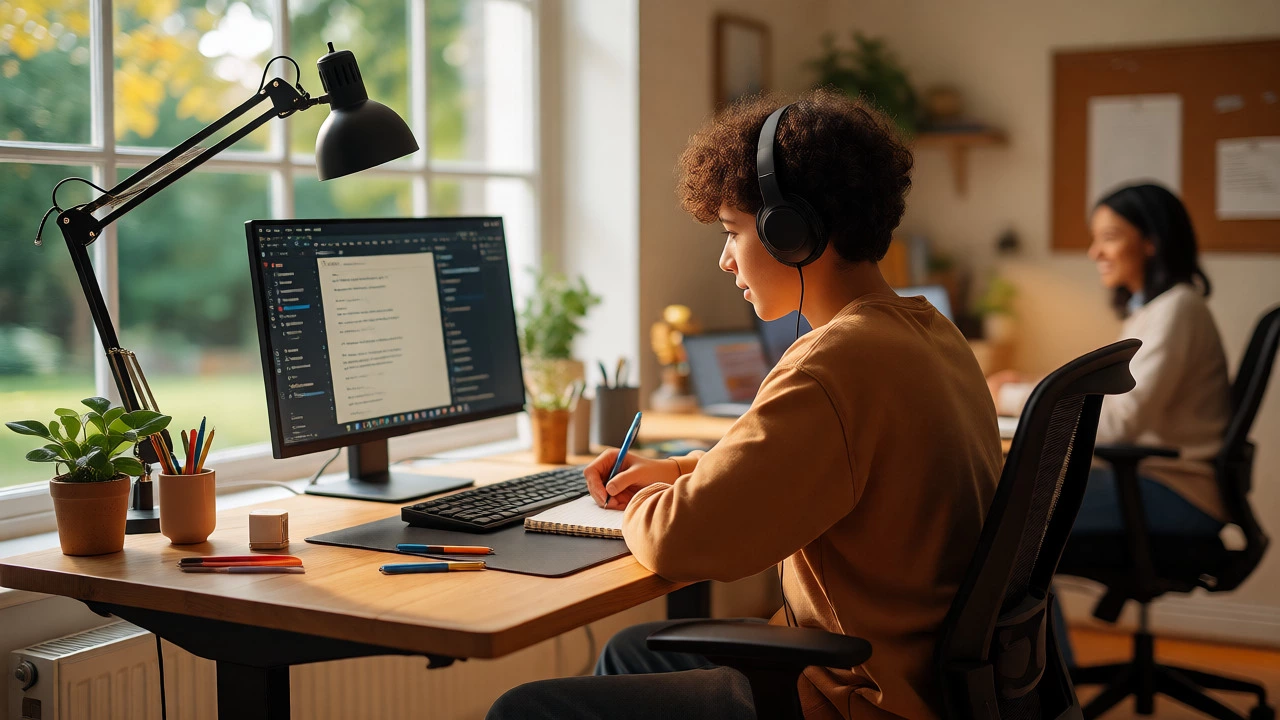
Implement strict screen-time boundaries. Use the 20-20-20 rule: every 20 minutes, look at something 20 feet away for 20 seconds. Invest in ergonomic furniture-a proper chair and desk make a huge difference compared to slouching on a bed. Schedule mandatory outdoor activity blocks. In places like Wellington, where weather can be unpredictable, having indoor alternatives ready is smart. Dance videos, yoga, or simple strength training keep the body engaged.
Mental health is equally critical. Without the daily separation of leaving home for school, some kids feel trapped. They lack the mental switch that signals “school is over.” Create rituals to mark the end of the school day. Close the laptop, change clothes, step outside. This psychological boundary helps prevent burnout and maintains a healthy family dynamic.
Making the Decision: A Checklist
If you are still on the fence, run through this quick diagnostic. Answer honestly.
- Does your child ask questions? Curious kids tend to thrive in self-directed environments.
- Can they focus for 45 minutes without interruption? Attention span matters more than age.
- Do you have a dedicated workspace? Chaos in the house leads to chaos in learning.
- Is there a local community for online learners? You don’t want to be isolated.
- Have you tested it? Try a one-week trial before committing to a term.
If you checked most of these boxes, online school could be a fantastic fit. If you struggled with the first three, proceed with caution or look for hybrid options. Remember, this decision isn’t permanent. Education is a marathon, not a sprint. You can pivot halfway through the year if things aren’t working.
Frequently Asked Questions
Will online school hurt my child's college applications?
Generally, no. Most universities accept credits from accredited online high schools. However, admissions officers may look closer at grades if the school is unknown. To mitigate this, encourage your child to take standardized tests (like SATs or equivalent) to prove academic ability independently of the school reputation. Also, highlight extracurricular activities to show well-roundedness.
How much time does online school actually take?
It varies. Some synchronous programs require live attendance for 6-7 hours a day, similar to brick-and-mortar schools. Asynchronous programs allow flexibility, so a motivated student might finish core work in 4 hours, while a slower processor takes longer. The key is consistency. Treat it like a job with set hours to avoid procrastination dragging the day out indefinitely.
What if my child hates writing essays?
Online feedback loops can be slower for writing. If this is a pain point, look for providers that offer live tutoring sessions for writing workshops. Alternatively, supplement with a local writing coach. Digital tools like Grammarly or collaborative documents can help streamline the editing process, but human guidance remains essential for developing voice and argument structure.
Is it cheaper than private school?
Usually, yes. Even premium online academies often cost less than traditional private institutions because they lack facility overheads like buildings, buses, and extensive staff. Public online charters are often free. However, factor in hidden costs: reliable high-speed internet, updated hardware, software subscriptions, and potentially hiring tutors for difficult subjects.
Can siblings share devices effectively?
It’s tricky. Ideally, each student needs their own device to avoid login conflicts and distraction. If sharing is necessary, stagger schedules or use dual-boot setups. Cloud-based platforms help, as they save progress automatically, allowing seamless switching between users. Just ensure the network bandwidth supports multiple simultaneous video streams if everyone has live classes.
Write a comment