
Learning Style Compatibility Checker
Answer these questions honestly to find out which educational model fits your life in 2026.
Analyzing...
Why this fits you:
You’ve probably heard the terms "online learning" and "distance learning" used interchangeably. Maybe you’re looking at course catalogs right now, seeing both labels, and wondering if there’s actually a difference or if it’s just marketing speak. Here is the short answer: yes, there is a difference, but in 2026, the line is blurrier than ever before.
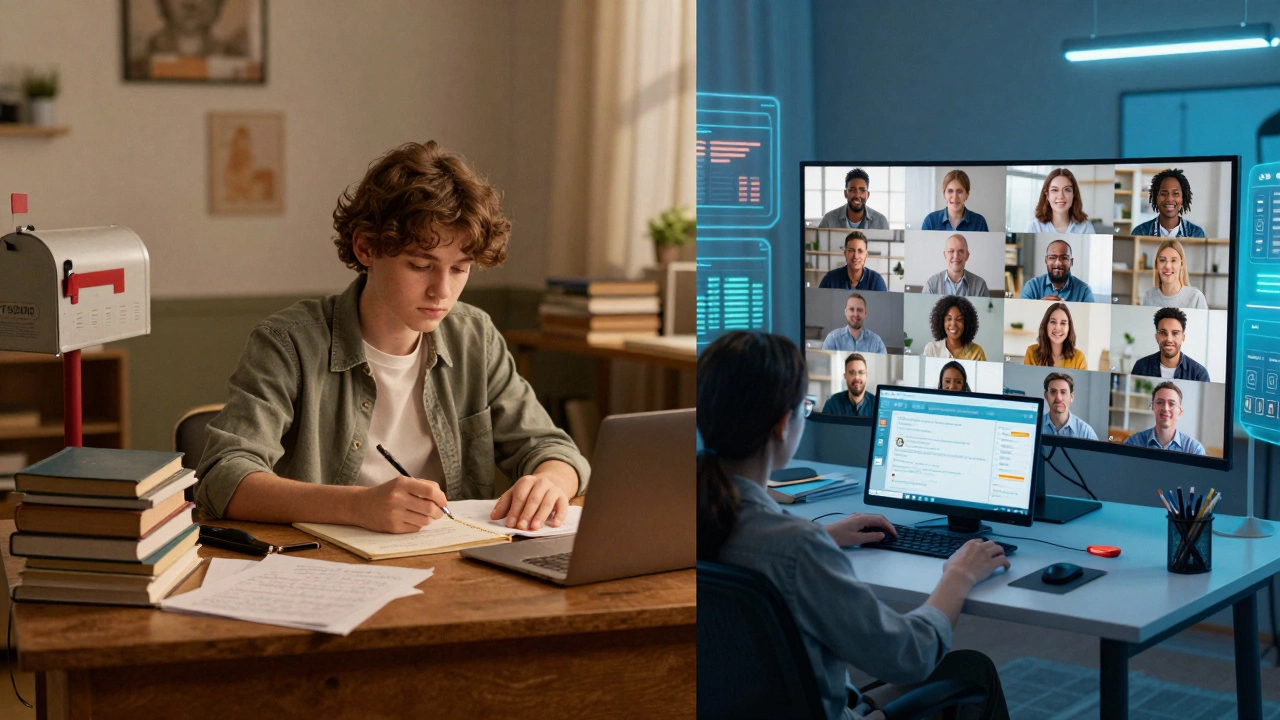
Traditionally, distance learning is a broad educational model where students and instructors are separated by physical distance, often relying on printed materials or delayed communication. Think of those old correspondence courses where you mailed in homework packets. Correspondence education was the original form. Today, it has evolved, but the core principle remains: flexibility over real-time interaction.
Online learning is a specific subset of distance learning that uses internet-based technologies to deliver content, facilitate interaction, and assess student progress. It’s the Zoom class, the Canvas module, the live webinar. It requires a stable internet connection and usually happens in real-time or near-real-time.
The Core Distinction: Synchronous vs. Asynchronous
If you want to understand the practical difference, you need to look at time. This is the biggest factor that affects your daily schedule.
Synchronous learning is education that occurs in real-time, requiring students and teachers to be present at the same time. Most modern online classes fall into this category. You log in at 2 PM on Tuesday. The professor is there. Your classmates are there. If you miss it, you missed the lecture (unless it was recorded). This mimics the traditional classroom structure but moves it to a digital space.
Asynchronous learning is education that does not require real-time participation, allowing students to access materials and complete assignments on their own schedule. This is the heart of traditional distance learning. You get a packet of readings, watch pre-recorded videos, and submit an essay by Friday. You might never talk to the instructor directly during the week.
| Feature | Traditional Distance Learning | Modern Online Learning |
|---|---|---|
| Delivery Method | Printed mail, DVDs, radio, early email | LMS platforms, video conferencing, cloud storage |
| Interaction Timing | Mostly asynchronous (delayed) | Mix of synchronous (live) and asynchronous |
| Technology Requirement | Low (mail, basic computer) | High (stable broadband, webcam, microphone) |
| Student Community | Isolated, individual study | Collaborative, discussion boards, group projects |
| Feedback Speed | Weeks or months | Days or hours |
How Technology Changed the Game
In the past, if you wanted a degree while working full-time, you signed up for a correspondence course offered by universities like the Open University or independent colleges. You received textbooks in the mail. You wrote essays. You mailed them back. It took forever. But it worked for people who couldn’t sit in a lecture hall.
Then came the internet. Suddenly, "distance" didn’t mean miles; it meant bandwidth. Learning Management Systems (LMS) are software applications like Moodle, Blackboard, or Canvas that organize and deliver online courses. These tools allowed schools to digitize everything. Assignments, grades, discussions-all online.
By 2020, the pandemic forced a massive shift. Schools that once relied on hybrid models moved entirely online. What we now call "online learning" became the default for millions. But here’s the catch: many institutions still use the term "distance learning" for their fully self-paced programs, while reserving "online" for live virtual classrooms.
Who Is Each Model For?
Choosing between these two isn’t about which one is better. It’s about which one fits your life right now.
Choose traditional distance learning (asynchronous) if:
- You work irregular hours or night shifts.
- You have caregiving responsibilities that make fixed schedules impossible.
- You prefer deep, focused study sessions over quick, reactive interactions.
- You struggle with camera fatigue or public speaking anxiety.
- You live in an area with poor internet connectivity.
Choose modern online learning (synchronous/hybrid) if:
- You thrive on routine and structure.
- You learn best through debate and immediate feedback.
- You want to build a professional network with peers in real-time.
- You have reliable high-speed internet and a quiet workspace.
- You need accountability from an instructor watching your progress weekly.
The Hybrid Reality in 2026
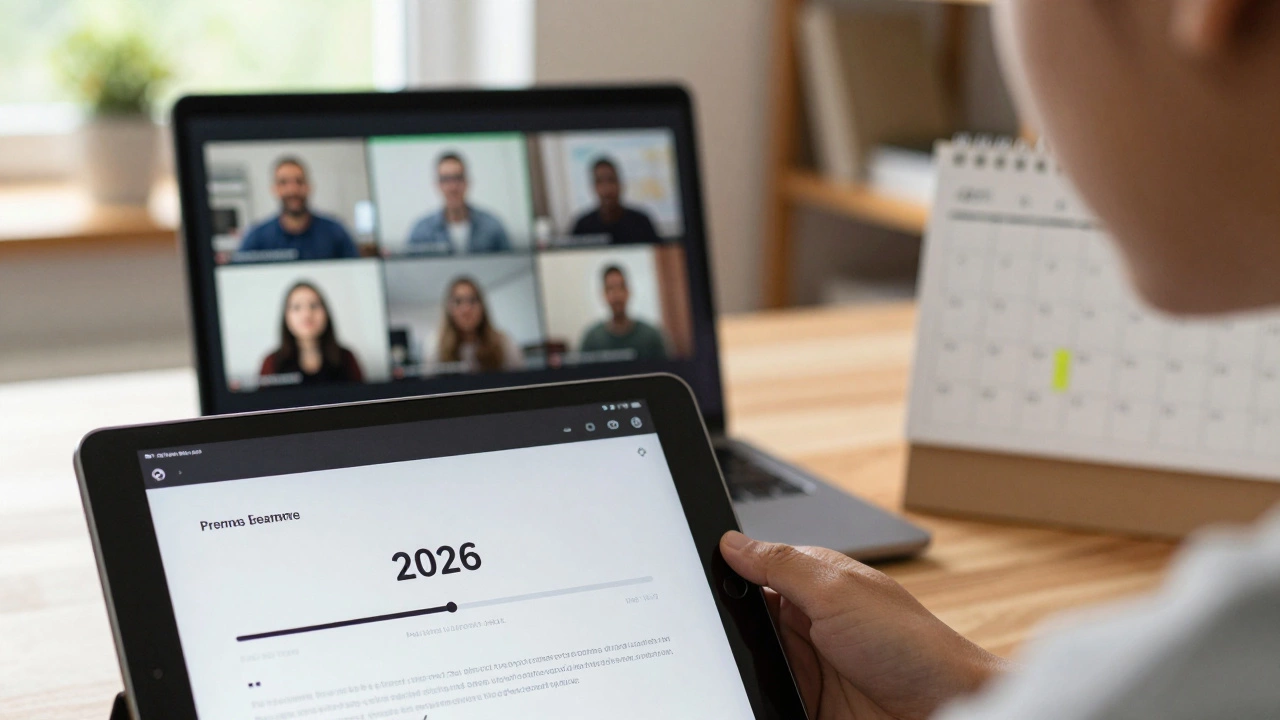
Let’s be honest: pure distance learning and pure online learning are becoming rare. Most programs today are hybrid learning models that combine elements of both synchronous and asynchronous instruction to maximize flexibility and engagement.
A typical university course might look like this:
- Monday: Watch a pre-recorded lecture (asynchronous/distance style).
- Wednesday: Join a live breakout session to discuss the material (synchronous/online style).
- Friday: Submit a project via the LMS portal (digital delivery).
This blend tries to give you the best of both worlds. You get the flexibility to learn at your own pace, plus the human connection of live interaction. But it also means you need to manage your time carefully. Missing the live session doesn’t mean you fail, but it might mean you lose out on valuable peer insights.
Cost and Accessibility Considerations
Price tags can vary wildly. Generally, Massive Open Online Courses (MOOCs) are free or low-cost online courses offered by universities and organizations to large audiences. Platforms like Coursera or edX offer these. They are often asynchronous and fit the traditional distance learning mold. You pay only if you want a certificate.
However, accredited degree programs that include synchronous online components often cost more. Why? Because they require more instructor time. A professor holding a live Q&A session every week is a bigger resource drain than grading automated quizzes. So, when comparing tuition, check what’s included. Are you paying for live support, or just access to recorded videos?
Accessibility is another key factor. Universal Design for Learning (UDL) is an educational framework aimed at improving and optimizing teaching and learning for all people based on scientific insights into how humans learn. Modern online platforms often integrate UDL principles better than older distance learning materials. Captions, screen readers, and adjustable playback speeds are standard in good LMS platforms. Older correspondence-style materials may lack these features unless specifically requested.
Quality and Accreditation
Does the mode of delivery affect the quality of your degree? Not necessarily. A diploma from a fully asynchronous program carries the same weight as one from a live online program, provided the institution is accredited. Look for regional accreditation in the US or equivalent bodies elsewhere. Don’t let the label scare you. Many top-tier universities offer fully online degrees that are identical in rigor to their on-campus versions.
However, beware of diploma mills. Some shady operators use the term "distance learning" to hide the fact that there is no actual instructor involvement. Always verify accreditation before paying. Check with the Department of Education or relevant national body.
Making the Right Choice
So, how do you decide? Start with your constraints. Do you have time for live classes? Do you have the tech setup? Then look at your learning style. Do you need a teacher to hold your hand, or do you prefer to set your own pace?
Talk to admissions counselors. Ask them specifically: "What percentage of this course is live?" "How quickly will I get feedback on assignments?" "Are there required login times?" Their answers will tell you whether you’re looking at true distance learning or interactive online education.
In 2026, the technology is advanced enough that both options can lead to great outcomes. The difference lies in how much control you want over your schedule versus how much interaction you crave from your educators and peers.
Is distance learning the same as online learning?
Not exactly. Online learning is a type of distance learning that uses the internet. All online learning is distance learning, but not all distance learning is online. Traditional distance learning might involve mail or pre-recorded media without live interaction, while online learning typically includes digital platforms and often real-time components.
Which is better for working professionals?
It depends on your schedule. If you work nights or weekends, asynchronous distance learning is better because you can study whenever. If you have regular evenings free and value networking, synchronous online learning might be more rewarding.
Do employers care if my degree was online or distance?
Generally, no. Employers care about the accreditation of the institution and the skills you demonstrate. As long as the school is reputable and accredited, the delivery method rarely matters on a resume.
Can I switch between online and distance learning formats?
Some institutions allow you to choose sections or even switch tracks, but many programs are designed specifically for one format. Check with the registrar or academic advisor before enrolling to see if flexibility exists.
Is online learning more expensive than distance learning?
Often, yes. Synchronous online programs require more instructor time and technical support, which can drive up costs. Asynchronous distance learning programs may be cheaper due to lower operational overhead, but prices vary widely by institution.
What technology do I need for online learning?
For synchronous online learning, you need a reliable computer, high-speed internet, a webcam, and a microphone. For asynchronous distance learning, a basic internet connection and a device capable of reading PDFs or playing videos are sufficient.
Are online degrees less prestigious?
No. Degrees from accredited online programs hold the same value as on-campus degrees. Prestige comes from the university's reputation, not the delivery method. Top universities like Harvard and MIT offer respected online credentials.
Write a comment