
Homeschooling Readiness & Fit Assessment
Decision Checklist
Answer these questions honestly to gauge your family's readiness for a homeschooling environment tailored to ADHD.
Result Title
Recommended Next Steps:
Does your child bounce off the walls in a traditional classroom? Do they struggle to focus during long lectures or feel overwhelmed by sensory noise? If you have a child with ADHD (Attention-Deficit/Hyperactivity Disorder), the standard school model often feels like a square peg in a round hole. This frustration leads many parents to ask: is homeschooling actually better?
The short answer isn’t a simple yes or no. For some families, pulling out of public school transforms their child’s academic life and self-esteem. For others, it creates isolation and logistical nightmares. The truth lies in how well you can tailor the environment to your child’s specific neurodivergent needs.
Why Traditional Schools Struggle with ADHD
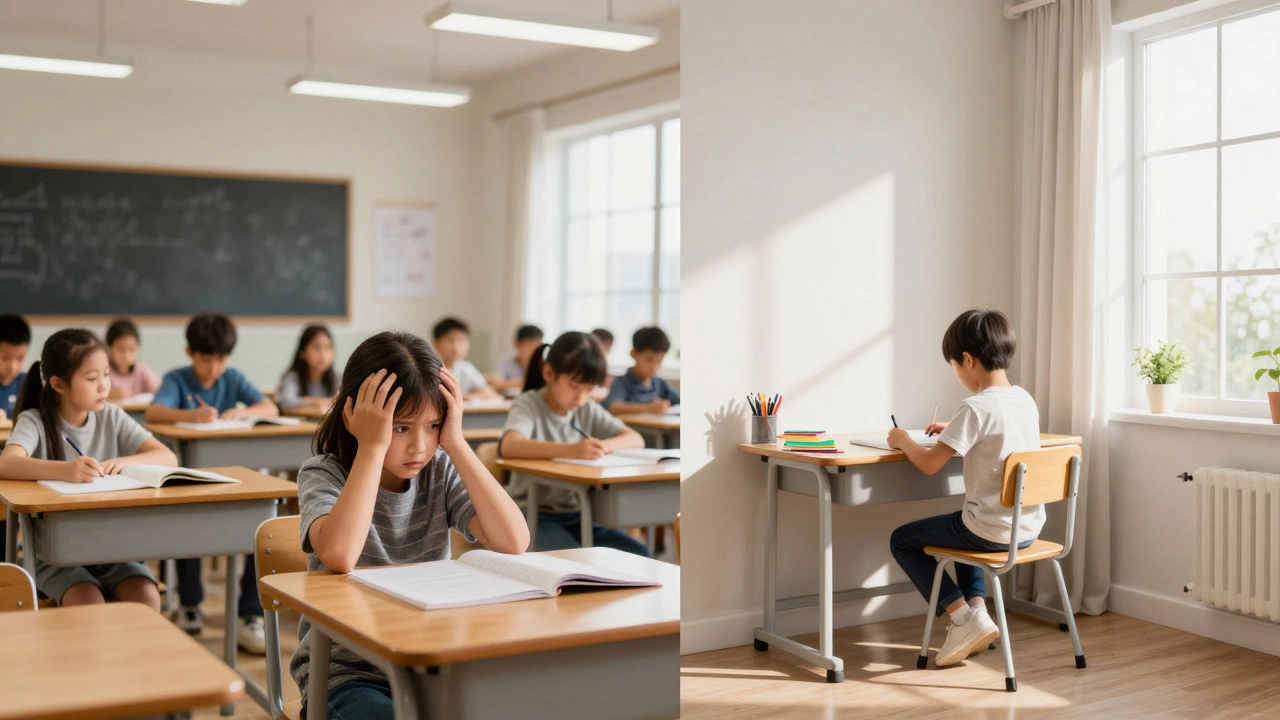
To understand if homeschooling is the right move, we first need to look at why conventional schooling often fails children with attention deficits. The industrial-era school model relies on rigid structures: sitting still for 45-minute blocks, following a single pace for an entire class, and navigating complex social hierarchies without direct guidance.
For a neurotypical student, these rules are manageable. For a child with ADHD, they are barriers. Research from the CDC highlights that students with ADHD are more likely to be suspended or expelled than their peers, often due to behavioral issues stemming from impulsivity rather than malice. In a classroom of 30 students, a teacher cannot provide the immediate feedback loop that an ADHD brain craves. By the time the teacher notices the distraction, the moment has passed.
- Sensory Overload: Fluorescent lights, humming HVAC systems, and chatter create a chaotic environment that drains cognitive resources.
- Lack of Movement: Sitting still contradicts the biological need for movement in hyperactive children, leading to restlessness and poor retention.
- Social Anxiety: Bullying and peer pressure disproportionately affect children with ADHD, who may miss subtle social cues or react impulsively.
The Case for Homeschooling: Customization and Control
Homeschooling removes the one-size-fits-all constraint. When you teach at home, you control the schedule, the environment, and the curriculum. This flexibility is the primary advantage for families dealing with executive dysfunction.
You can implement "movement breaks" every 20 minutes without disrupting other students. You can switch from reading textbooks to hands-on science experiments when focus wanes. You can start lessons at 9:30 AM instead of 8:00 AM if your child is a late bloomer. This autonomy allows you to align learning with your child’s natural rhythms rather than forcing them into an arbitrary mold.
| Feature | Traditional Classroom | Homeschooling Environment |
|---|---|---|
| Pacing | Fixed; moves with the group | Flexible; adjusts to individual comprehension |
| Sensory Input | High; noisy and visually cluttered | Low; controlled and minimalist |
| Social Interaction | Large groups; unstructured peer dynamics | Small groups; curated co-ops and clubs |
| Feedback Loop | Delayed (days or weeks) | Immediate (real-time correction) |
| Movement | Restricted to recess | Integrated into lessons |
The Hidden Challenges: Isolation and Structure
While customization sounds ideal, homeschooling introduces new challenges. The biggest risk is social isolation. Children with ADHD often struggle with social skills precisely because they haven’t had enough practice. Removing them from a school setting can exacerbate this deficit if not managed carefully.
Furthermore, homeschooling requires immense discipline from the parent. You become the teacher, the administrator, and the therapist. Without external structure, days can slip away. Many parents report burnout within the first year because they underestimated the emotional labor involved. You must build a routine that provides enough predictability to help your child regulate their emotions, but enough flexibility to accommodate their energy levels.
Another concern is academic rigor. It is easy to fall into the trap of "easy mode," where you skip difficult subjects to avoid conflict. While reducing stress is good, avoiding challenge entirely can lead to gaps in knowledge later on. You need to balance empathy with high expectations.

Strategies for Successful Homeschooling with ADHD
If you decide to homeschool, success depends on implementing specific strategies tailored to neurodivergent brains. Here are practical approaches that work:
- Chunking Tasks: Break large assignments into tiny, manageable steps. Instead of "write an essay," use "outline three points." This reduces overwhelm and provides frequent dopamine hits upon completion.
- Multi-Sensory Learning: Combine visual, auditory, and kinesthetic inputs. Use colored pencils for math, read aloud for history, and act out scenes for literature. Engaging multiple senses keeps the brain alert.
- Body Doubling: Work alongside your child. Their presence can help anchor your child’s focus. This technique is widely used in ADHD coaching and is highly effective at home.
- Visual Schedules: Use whiteboards or apps to display the day’s plan. Visual cues reduce anxiety about what comes next and minimize transitions, which are often painful for ADHD minds.
- Incorporate Interests: Leverage hyperfocus. If your child loves dinosaurs, use dinosaur examples for math problems. Interest-based learning drives engagement naturally.
Socialization: Beyond the Playground
Critics often argue that homeschooling limits social development. However, for children with ADHD, structured social environments can be healthier than the chaotic playground. You can curate social interactions through:
- Homeschool Co-ops: Join local groups where families share teaching responsibilities. These often have smaller class sizes and more supportive atmospheres.
- Sports and Clubs: Enroll your child in team sports, martial arts, or music lessons. These activities teach cooperation, discipline, and friendship in a focused context.
- Community Service: Volunteering provides real-world social interaction with diverse age groups, building empathy and communication skills.
The key is intentionality. You must actively seek out social opportunities rather than waiting for them to happen. Quality matters more than quantity. One meaningful friendship is better than thirty superficial acquaintances.

When Homeschooling Might Not Be the Right Fit
Homeschooling isn’t a cure-all. It may not be suitable if:
- You Lack Support: If you work full-time and have no partner or helper, managing homeschooling alone is unsustainable.
- Your Child Craves Peer Connection: Some children thrive on the energy of a large group. If your child is socially motivated, removing them from school might cause depression.
- Specialized Resources Are Needed: Public schools often provide free access to occupational therapists, speech pathologists, and specialized equipment. Replicating these services privately can be expensive.
- Parental Conflict: If the relationship between parent and child is strained, adding the teacher-student dynamic can worsen tensions.
Hybrid Models: The Best of Both Worlds?
You don’t have to choose between all-or-nothing. Hybrid schooling combines homeschooling with part-time attendance at a charter school or private program. This model offers:
- Academic Flexibility: Learn core subjects at home while attending school for electives or labs.
- Social Balance: Maintain peer connections without facing full-day sensory overload.
- Professional Support: Access teachers and specialists for difficult subjects.
This approach is gaining popularity among ADHD families because it mitigates the risks of isolation while preserving the benefits of customization.
Making the Decision: A Checklist
Before committing to homeschooling, ask yourself these questions:
- Can I dedicate 4-6 hours daily to teaching and planning?
- Do I have a quiet, organized space for learning?
- Am I willing to advocate for my child’s social needs outside the home?
- Have I explored accommodations within the current school system (e.g., IEPs, 504 plans)?
- Is my child open to this change, or will they resist it?
If you answered yes to most, homeschooling could be a transformative option. If you’re unsure, consider a trial period. Many states and countries allow provisional homeschooling permits, letting you test the waters for a semester.
Ultimately, the goal isn’t just academic achievement. It’s raising a confident, capable adult who believes in their own potential. For many children with ADHD, homeschooling provides the safe harbor they need to discover their strengths. But it requires patience, creativity, and a willingness to adapt. There is no perfect path, only the one that works best for your unique family.
Does homeschooling improve ADHD symptoms?
Homeschooling doesn't cure ADHD, but it can significantly reduce symptom severity by minimizing environmental triggers. By controlling sensory input, allowing movement, and providing immediate feedback, you create conditions where executive function challenges are less pronounced. Many parents report fewer meltdowns and improved focus after switching to homeschooling.
How do I handle socialization for a homeschooled child with ADHD?
Socialization must be intentional. Join homeschool co-ops, enroll in structured extracurriculars like sports or music, and arrange playdates with understanding peers. Focus on quality interactions over quantity. Teach social skills explicitly through role-playing and discuss scenarios beforehand to prepare your child for different social contexts.
What are the legal requirements for homeschooling a child with special needs?
Requirements vary by location. In most jurisdictions, you must file a notice of intent to homeschool and submit annual progress reports. For children with ADHD, ensure you maintain records of educational activities and any therapeutic interventions. Check local laws regarding standardized testing and health records. Consult with a local homeschool association for specific guidance.
Can I homeschool if I work full-time?
It is challenging but possible with a hybrid approach or flexible work arrangements. Consider unschooling methods that integrate learning into daily life, or hire a tutor for core subjects. Online curricula with pre-recorded lessons can also reduce your teaching load. Communication with your employer about remote work options is crucial.
How do I keep a child with ADHD engaged during lessons?
Use short, varied activities. Switch subjects every 20-30 minutes. Incorporate movement, such as standing desks or walking while listening to audiobooks. Use gamification apps for practice. Allow fidget tools to help with focus. Most importantly, follow your child's interests to leverage their natural curiosity and hyperfocus capabilities.
Write a comment