

ADHD Support Path Finder
How to use: Select the challenges that best describe the student's experience in the classroom to see recommended support strategies and the potential legal framework (IEP or 504).
Step 1: Identify the Primary Barriers
Needs extra time for tests or frequent breaks.
AccommodationEasily distracted by noise or needs a quiet zone.
AccommodationStruggles with reading, writing, or math concepts.
Specialized InstructionCannot organize tasks or start assignments independently.
Specialized Instruction💡 Pro Tip:
Remember, this tool is for educational guidance. Always start your formal request for support in writing to the school district to ensure a legal paper trail.
Key Takeaways
- ADHD is recognized as a special educational need (SEN) because it impacts how a person learns and processes information.
- While not every person with ADHD requires a formal special education plan, many qualify for legal protections and accommodations.
- Support usually falls under categories like 'Learning Disabilities' or 'Other Health Impairments' (OHI) in official school documentation.
- The goal of special needs support for ADHD is to remove barriers, not to "fix" the person.
Defining the ADHD Connection to Special Needs
To get this right, we first have to clear up what we mean by "special needs." In an educational context, Special Educational Needs (or SEN) is an umbrella term for children who have a learning difficulty or disability that makes it harder for them to make educational progress than most children of the same age. It doesn't mean the student isn't capable; it means the standard way of teaching isn't working for them.
Now, look at ADHD (Attention Deficit Hyperactivity Disorder). It's a neurodevelopmental disorder characterized by persistent patterns of inattention, hyperactivity, and impulsivity. When these traits hit the classroom, they create a gap between a student's intellectual ability and their actual performance. If a kid can't sit still for twenty minutes or can't organize a backpack, they aren't "being bad"-they're experiencing a functional limitation. This is exactly why ADHD is categorized as a special need.
Think of it like this: if a student uses a wheelchair, the school provides a ramp. A student with ADHD has an "invisible" barrier-perhaps a lack of executive function-and the educational "ramp" they need might be a quiet workspace or a broken-down set of instructions. Both are special needs because both require a change in environment to ensure equal access to learning.
Where ADHD Fits in the Legal Framework
If you're in the US, the legal side of this is handled by the Individuals with Disabilities Education Act (or IDEA). Under IDEA, ADHD doesn't have its own standalone category. Instead, it usually falls under Other Health Impairment (OHI). This is a bit of a clunky label, but it allows schools to provide specialized instruction and services.
Then there's the Section 504 Plan. This is a different beast. While an IEP (Individualized Education Program) is for students who need specialized instruction, a 504 plan is for students who need accommodations. For example, a student with ADHD might be brilliant at math but can't finish a test on time because they get distracted. A 504 plan gives them extra time. They aren't "special education" in the sense of taking different classes, but they have special needs that require a modified environment.
| Feature | IEP (Individualized Education Program) | 504 Plan |
|---|---|---|
| Primary Goal | Specialized instruction and modified curriculum | Accessibility and accommodations |
| Legal Basis | IDEA (Special Education Law) | Section 504 of the Rehabilitation Act |
| Requirement | Must have a disability that adversely affects education | Must have a disability that limits a major life activity |
| Example Support | Small group reading lessons with a specialist | Preferential seating away from the door |
The Role of Executive Function in Learning
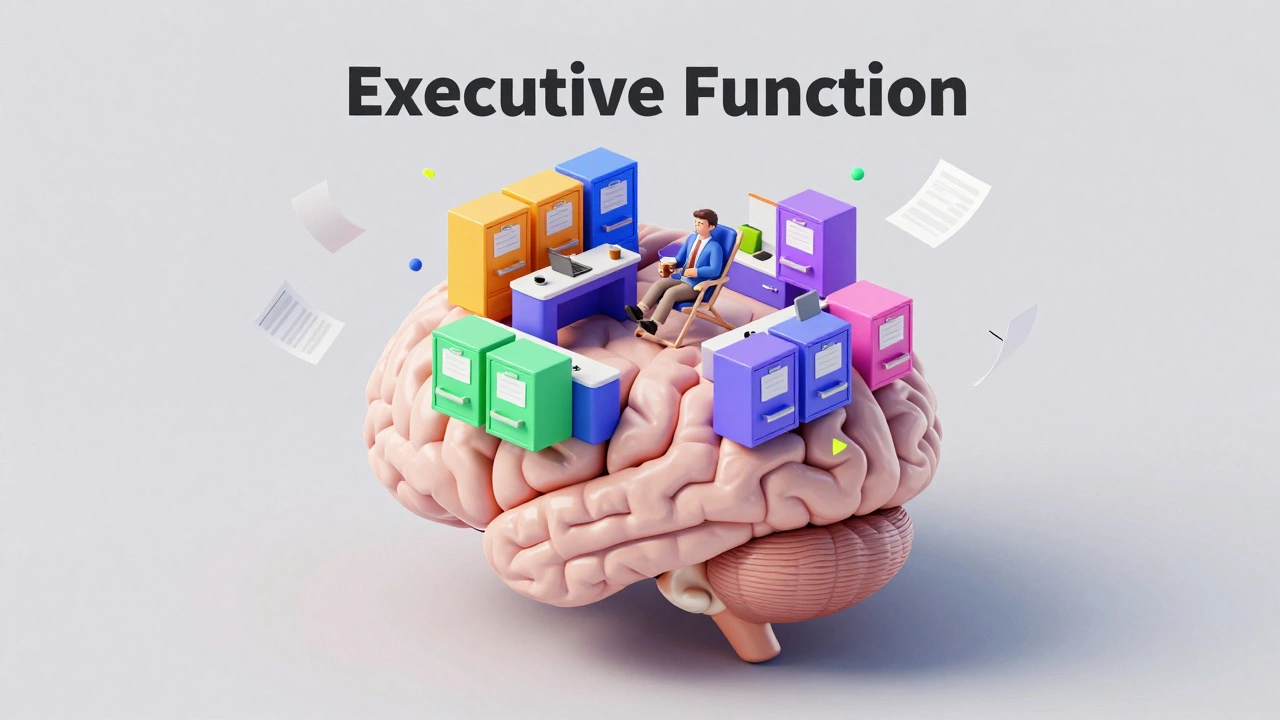
To understand why ADHD is a special need, we have to talk about Executive Function. This is the management system of the brain. It handles things like working memory, impulse control, and emotional regulation. In a typical brain, the executive function acts like a project manager. In an ADHD brain, that project manager is often on a permanent coffee break.
When a teacher says "clear your desk and get out your notebook," a student with strong executive function does it automatically. A student with ADHD might get stuck on "clear your desk," forget what a notebook is for a split second, or start drawing on their hand. This isn't a lack of intelligence-it's a failure of the brain's internal organization. This is why ADHD special needs support focuses heavily on "scaffolding." Scaffolding is the process of providing temporary supports, like checklists or visual timers, until the student develops their own strategies.
Consider a real-world example: Sarah is a 10-year-old who loves science but fails every history project. Why? Because she can't break a three-week assignment into smaller steps. She waits until the night before, gets overwhelmed, and shuts down. By classifying her ADHD as a special need, the school can provide her with a "task breakdown' sheet. Suddenly, she's not a failing student; she's a successful student with a specific support tool.
Common Accommodations for Students with ADHD
If we agree that ADHD is a form of special needs, the next question is: what does that actually look like in a classroom? It's not about making things "easier," but about making things possible. Effective support usually targets three main areas: environment, instruction, and assessment.
Environmental Tweaks
Movement is a necessity, not a distraction, for many with ADHD. Instead of forcing a student to sit still (which actually uses up all their brain power and leaves none for the lesson), schools might provide a wobble stool or a fidget tool. Some students benefit from "heavy work"-like carrying a stack of books to the library-to reset their nervous system before a big task.
Instructional Shifts
Long lectures are the enemy of the ADHD brain. Teachers might use "chunking," where a 30-minute lesson is broken into three 10-minute bursts with a quick movement break in between. Visual aids are also critical. Instead of just saying "do the odd numbers on page 42," a teacher might write it on the board in bright colors so the student can refer back to it when they inevitably lose their place.
Assessment Changes
Standardized tests are often a poor measure of an ADHD student's knowledge because they test attention as much as they test the subject. Accommodations here include taking tests in a separate, quiet room or having a teacher read the questions aloud to ensure the student is struggling with the content, not the reading process.

The Neurodiversity Perspective
There is a growing movement to move away from the "disorder" language and toward Neurodiversity. This perspective suggests that ADHD isn't a "broken" brain, but a different way of processing. From this angle, ADHD is a special need not because the person is deficient, but because the world is designed for a "neurotypical" brain.
When we view ADHD through the lens of neurodiversity, we start seeing the strengths that often come with the struggle. Hyperfocus, for example, allows some people with ADHD to spend ten hours straight mastering a complex topic they're passionate about. Divergent thinking often leads to incredible creativity and problem-solving skills that a more rigid thinker might miss.
The goal of special needs education in this context is to balance the supports. We provide the 504 plan to help with the boring stuff-like organizing a folder-so that the student's natural creativity and energy can actually be used in the classroom. It's about optimizing the environment to fit the brain, rather than trying to force the brain to fit the environment.
Overcoming the "Invisible Disability" Stigma
One of the hardest parts of ADHD being a special need is that it's often invisible. When a child has a physical disability, the need for support is obvious. When a child has ADHD, they are often labeled as "lazy," "unmotivated," or "defiant." This is where the struggle for recognition becomes a battle.
Parents often face pushback from schools that say, "But they're so smart, they just need to try harder." This is a fundamental misunderstanding of how ADHD works. Trying harder is like telling a person who needs glasses to "squint harder" to see the board. It doesn't work. The solution isn't more effort; it's the right tool (the glasses, or in this case, the accommodation).
Advocating for ADHD as a special need requires a shift in conversation. Instead of focusing on behavior (e.g., "he won't sit still"), focus on the function (e.g., "he has a physiological need for movement to maintain focus"). When you frame it as a neurological need rather than a behavioral choice, you move the conversation toward solutions and support.
Does having ADHD always mean a child has special needs?
No. Not everyone with ADHD requires special education services. Some students are able to manage their symptoms with home-based strategies, medication, or they may have a learning style that naturally aligns with their ADHD traits. However, if the ADHD significantly interferes with their ability to learn or function in school, it is classified as a special educational need.
Is ADHD considered a learning disability?
Technically, ADHD is a neurodevelopmental disorder, not a specific learning disability (like dyslexia). However, it often co-occurs with learning disabilities and affects learning in very similar ways. In many school systems, it's grouped under the same umbrella of special needs because the support required is often the same.
Can a student get an IEP for ADHD alone?
Yes, but it depends on the impact. To qualify for an IEP, the student must not only have a disability but also demonstrate that the disability adversely affects their educational performance to the point where they need specialized instruction. If they are performing well academically but just struggle with organization, a 504 plan is more common.
What is the first step to getting special needs support for ADHD?
The first step is usually a formal diagnosis from a medical professional (like a pediatrician or neuropsychologist). Once you have a diagnosis, you can request a formal evaluation from your school district in writing. This triggers a legal timeline for the school to assess the child and determine if they qualify for an IEP or 504 plan.
Will labeling my child with "special needs" hurt their future?
Quite the opposite. Without the proper labels and supports, students with ADHD often internalize a sense of failure, believing they are "stupid" or "bad." Getting the right support allows them to experience academic success, which builds the confidence and self-advocacy skills they need for college and the workplace.
Next Steps for Parents and Educators
If you're currently navigating this path, don't try to do it alone. For parents, the best move is to start a "paper trail." Every email and every meeting note regarding your child's struggles should be saved. When you request an evaluation, do it in writing-this starts the legal clock and ensures accountability.
For educators, the goal is to move from "compliance" to "connection." Instead of penalizing a student for not having their homework turned in, ask them to show you where the homework is in their messy folder. Helping them find it teaches the skill of organization, whereas giving them a zero only teaches them that they are failing. Small shifts in how we handle the "symptoms" of ADHD can turn a chaotic classroom experience into a successful one for everyone.
Write a comment