
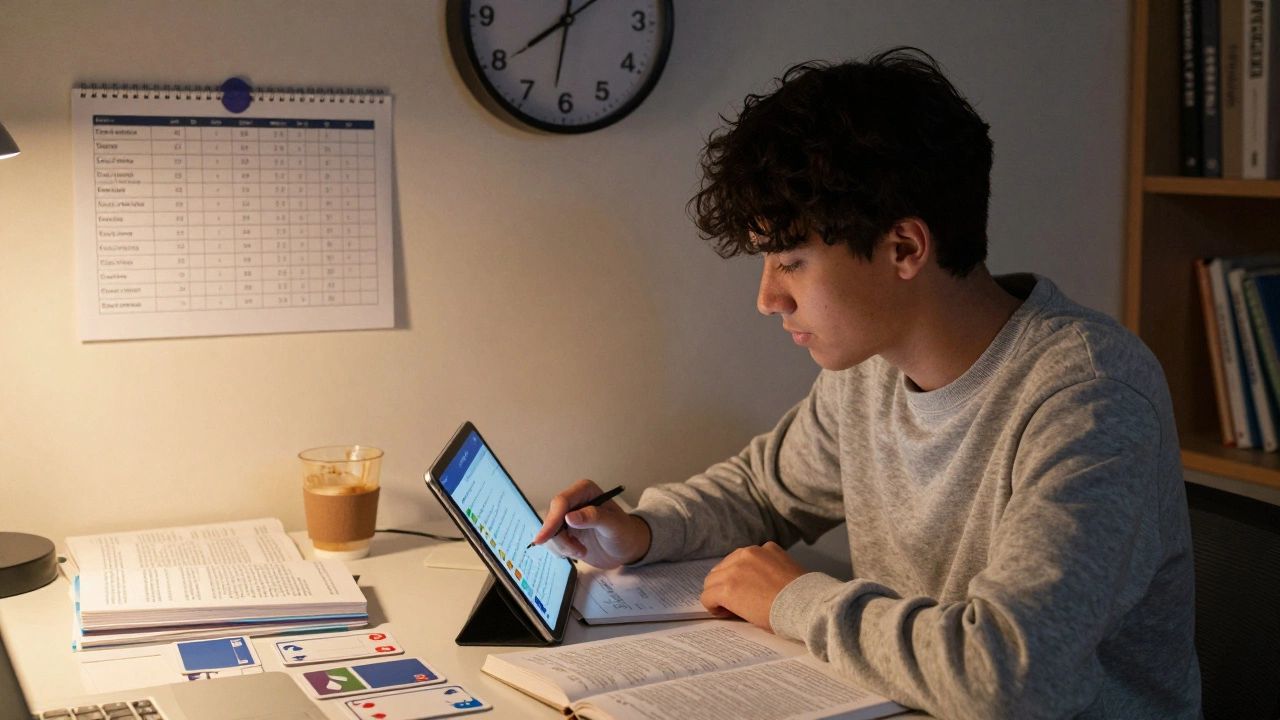
Three hours a day sounds solid. You sit down after school, turn off your phone, and power through flashcards, past papers, and notes. By the end of the week, you’ve logged over 20 hours of revision. That’s more than most students. So, is it enough? The answer isn’t yes or no-it’s depends.
What 3 Hours of Revision Actually Looks Like
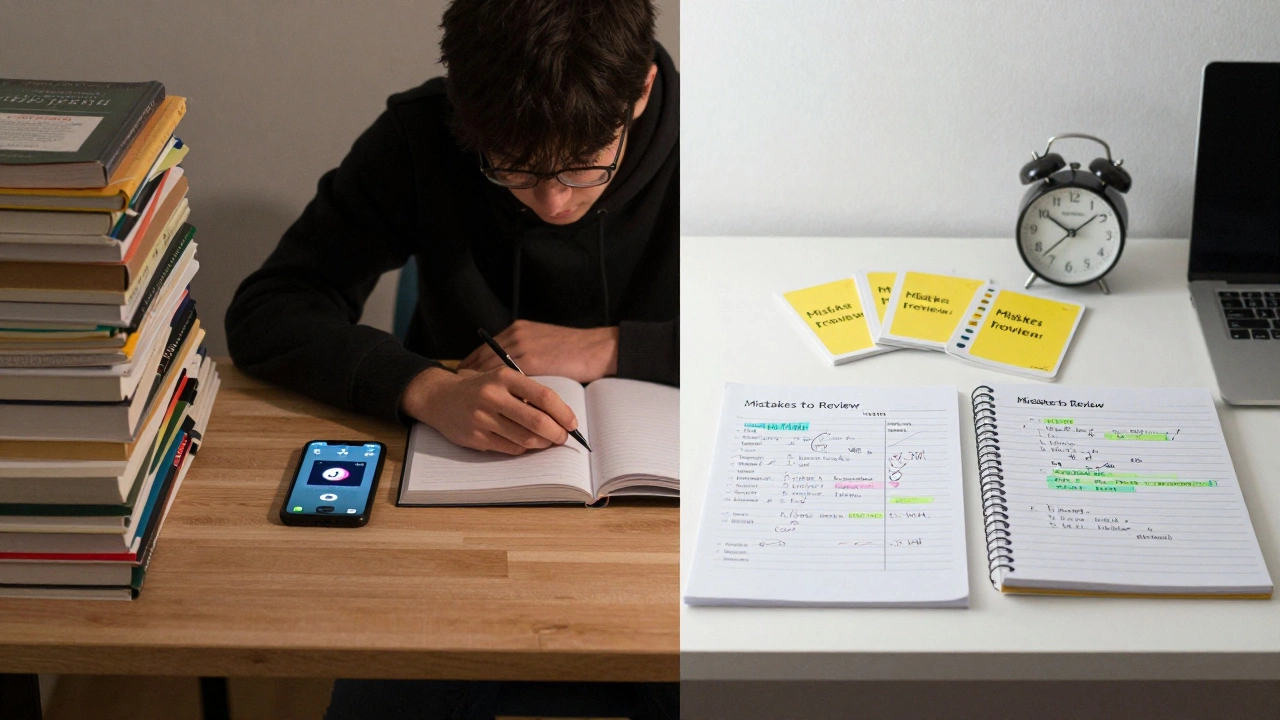
Not all revision time is created equal. Three hours spent scrolling through highlighted textbook pages while half-watching TikTok isn’t the same as three focused hours using active recall and spaced repetition. One student might read the same biology chapter three times and remember nothing. Another might spend 45 minutes testing themselves on cell division using flashcards, get two wrong, review those, and walk away with it locked in. The difference isn’t time-it’s technique.
GCSEs aren’t about how long you sit at your desk. They’re about how much sticks. The brain doesn’t store information like a USB drive. It forgets fast. That’s why cramming for 3 hours the night before an exam rarely works. But if you break that same 3 hours into 30-minute chunks over five days, with breaks in between and self-testing each time, you’re building real memory.
The Science Behind Revision Time
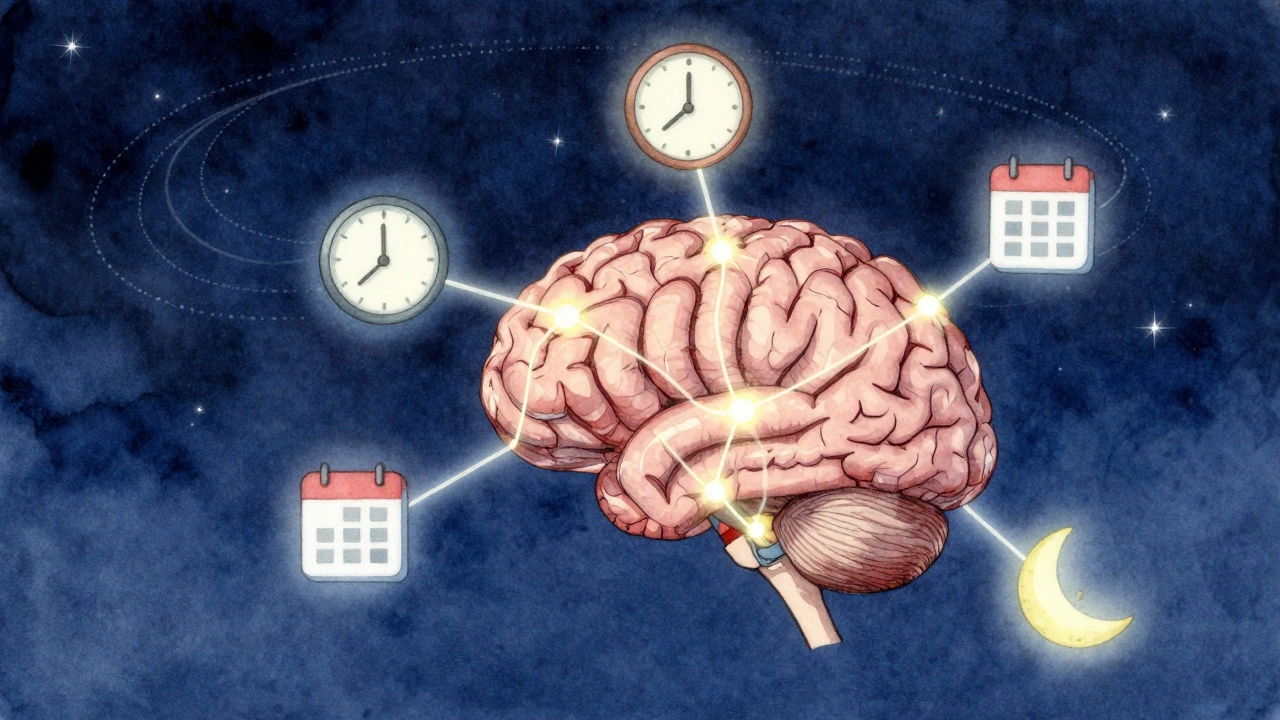
Research from the University of California, Los Angeles shows that students who spaced out their study sessions over several days scored 20% higher on exams than those who crammed the same total time in one sitting. That’s not magic-it’s how memory works. Each time you pull information back up from your brain, you strengthen the connection. This is called retrieval practice.
Also, the forgetting curve (first described by Hermann Ebbinghaus in the 1880s) proves we lose over 50% of new information within a day if we don’t revisit it. Three hours a day might seem like a lot, but if you’re not revisiting topics from previous days, you’re constantly relearning the same stuff. That’s inefficient.
So if you’re doing 3 hours a day but only covering new topics each time, you’re not revising-you’re just learning slowly. Real revision means going back. You need to mix old and new. That’s why a good revision schedule isn’t linear. It’s spiral: revisit yesterday’s topic, then yesterday’s yesterday’s, then the week before.
Is 3 Hours Enough for All Subjects?
Here’s the hard truth: no single revision time fits all subjects. A student doing English Literature might need 90 minutes just to analyze one poem deeply-reading it, annotating it, writing a paragraph, then testing themselves on quotes. Meanwhile, Maths might only need 45 minutes of practice problems because the skill is built through repetition, not memorization.
Science subjects like Biology and Chemistry require heavy recall. You need to know 200+ definitions, processes, and equations. That’s not something you can wing with passive reading. You need active recall: cover the term, say it out loud, write it down, then check. That takes time. One student I spoke to spent 40 minutes a day on Biology flashcards alone-and still forgot half of them after two days.
So if you’re doing 3 hours a day and splitting it evenly across 5 subjects, that’s only 36 minutes per subject. For Maths or Science? Barely enough. For History or Geography? Maybe. But you’re not giving any topic the depth it needs.
What a Realistic GCSE Revision Schedule Looks Like
Forget the idea of doing the same thing every day. A working revision plan looks more like this:
- Monday: 45 min Maths (past paper section), 45 min Biology (flashcards + self-testing), 30 min English Lit (essay plan + quote review)
- Tuesday: 45 min Chemistry (equations + diagrams), 45 min History (timeline quiz), 30 min Maths (review Monday’s mistakes)
- Wednesday: 60 min English Lang (paper under timed conditions), 30 min Biology (review Tuesday’s flashcards), 30 min Geography (map skills)
- Thursday: 45 min Chemistry (practical questions), 45 min History (source analysis), 30 min Maths (weak topic drill)
- Friday: 90 min full past paper (one subject), 30 min review mistakes
- Saturday: 60 min all subjects (quick quiz on weak spots), 30 min mind maps
- Sunday: Rest or light review-no new content
This isn’t 3 hours every day. It’s 2.5 to 3.5 hours on most days, with variation. But here’s the key: every day includes at least one topic from the previous week. That’s how memory sticks.
When 3 Hours Isn’t Enough
Some students hit a wall around March. They’ve been doing 3 hours a day, but their mock results are slipping. Why? Three reasons:
- They’re not testing themselves-they’re just re-reading. You can’t revise by watching yourself read.
- They’re ignoring weak areas-they spend time on what they’re good at because it feels easier. That’s comfort, not progress.
- They’re not sleeping enough-revision doesn’t work if your brain is exhausted. Sleep is when memories consolidate.
If you’re doing 3 hours a day and still failing practice papers, the problem isn’t time. It’s strategy. You might need to cut back to 2 hours-but make those 2 hours brutal. One full past paper. One topic mastered. One mistake analyzed. That’s better than three hours of half-effort.
When 3 Hours Is Too Much
Some students think more hours = better results. They wake up at 5 a.m., revise until bedtime, skip meals, cancel friends, and burn out by February. That’s not dedication. That’s self-sabotage.
Studies from the University of Cambridge show that after 4 hours of focused study in a day, retention drops sharply. Mental fatigue sets in. Your brain stops absorbing. You start making careless mistakes. You feel anxious. And that anxiety makes you forget even more.
Three hours is the sweet spot for most students-if it’s focused. Pushing to 4 or 5 just leads to burnout. And burnout doesn’t just hurt your grades-it hurts your mental health. GCSEs are important, but they’re not your whole life.
What to Do If You’re Not Sure
Here’s a simple test: after your 3 hours, ask yourself:
- Did I test myself on something I learned yesterday?
- Did I write down or say out loud something I didn’t know before?
- Did I fix at least one mistake from last week’s practice paper?
If the answer to all three is yes, you’re on track. If not, you’re wasting time.
Also, check your mock results. If you’re improving by 5-10% every month, you’re doing fine. If you’re stuck or slipping, change your method-not your hours.
Final Answer: Is 3 Hours Enough?
Yes-if you’re using it right. No-if you’re just going through the motions.
3 hours a day gives you 90 hours over a 30-day revision period. That’s more than most students. But quantity doesn’t win GCSEs. Quality does. Focus on active recall. Mix old and new. Test yourself. Sleep. Rest. And don’t fall for the myth that longer = better.
The students who pass with top grades aren’t the ones who revise the most. They’re the ones who revise the smartest.
Is 3 hours of revision a day enough for GCSEs?
It can be enough-if you use that time actively. Just sitting and reading notes won’t help. You need to test yourself, review mistakes, and revisit old topics. Three focused hours with active recall beats five hours of passive reading.
Should I revise the same subject every day?
No. Mixing subjects helps your brain make stronger connections. But you should revisit each subject at least every 3-4 days. For example, if you studied Biology on Monday, review it again on Thursday or Friday. This spaced repetition is proven to boost memory.
What if I can only manage 2 hours a day?
Two focused hours are better than three distracted ones. Prioritize your weakest subjects. Use past papers and flashcards. Make sure you’re testing yourself on last week’s material. Quality matters more than quantity.
Is it better to revise in the morning or evening?
There’s no universal best time. Some people focus better in the morning after a good night’s sleep. Others are sharper after school. Try both and see what works. The key is consistency-pick a time and stick with it.
How do I know if my revision is working?
Check your progress with practice papers. If you’re getting fewer mistakes each time, understanding questions faster, and remembering facts without notes, you’re on track. If your scores aren’t improving, change your method-not your hours.
Can I revise too much?
Yes. After 4-5 hours of focused revision, your brain’s ability to absorb new information drops. Burnout leads to stress, poor sleep, and worse performance. Rest is part of revision. Take breaks, go for walks, and sleep 8 hours. Your brain consolidates memory while you sleep.
Next Steps
Start tomorrow by picking one subject you’ve been avoiding. Spend 30 minutes making flashcards for it. Test yourself without looking. Write down the ones you got wrong. Review them again in two days. That’s it. No extra hours. No guilt. Just one small, smart step.
GCSEs aren’t won by who studies the longest. They’re won by who remembers the most. And memory isn’t built by time-it’s built by effort, repetition, and smart habits.
Write a comment