

Digital SAT Score Simulator
The Digital SAT uses a multistage adaptive design. Your performance in Module 1 determines the difficulty of Module 2, which caps or unlocks your maximum potential score. Use this tool to see how early mistakes can limit your ceiling.
Enter your estimated accuracy percentages above and click Calculate to see your potential score range.
--
Total Estimated Score (400-1600)
You open your laptop, click "Start Test," and realize the clock is ticking faster than you expected. Maybe it’s just nerves. Or maybe the questions actually feel sharper, more direct, and less forgiving than what you saw in old practice books from 2018. You’re not imagining things. The SAT has undergone a massive transformation that fundamentally changes how difficulty is perceived and measured. Since the shift to the Digital SAT in March 2024 for U.S. students (and globally by 2025), the experience of taking this exam is unrecognizable compared to the paper-and-pencil era.
The short answer to "has it gotten harder?" is no, but the longer, more useful answer is that it has become different. For many students, the adaptive nature of the new test makes it feel harder because there is nowhere to hide. In the past, if you were great at math but terrible at reading, you could bank points in one section to offset losses in another. Now, every question counts equally toward your final score, and the algorithm adjusts the difficulty of the second module based on your performance in the first. If you ace the easy questions, you get hit with hard ones. If you stumble, you stay in the easier pool. This dynamic creates a psychological pressure cooker that feels significantly more intense than the static tests of the past.
The Digital Shift: What Actually Changed?
To understand the current landscape, you have to look at the mechanics. The College Board replaced the linear format with a multistage adaptive design. Here is how it works: The test is broken into two sections-Reading and Writing, and Math. Each section has two modules. Everyone starts with Module 1, which contains a mix of easy, medium, and hard questions. Your performance here determines which set of questions you see in Module 2. Score high in Module 1? You get a higher-difficulty Module 2, which unlocks the top end of the scoring scale. Score low? You get an easier Module 2, which caps your potential score lower.
| Feature | Paper SAT (Pre-2023) | Digital SAT (Current) |
|---|---|---|
| Duration | 3 hours + breaks | 2 hours 14 minutes |
| Question Format | Long passages, multiple questions per passage | Short passages, one question per passage |
| Adaptivity | None (Linear) | Multistage Adaptive (Module 2 depends on Module 1) |
| Calculator Use | Restricted to specific calculator types | Built-in graphing calculator allowed throughout |
| Scoring Scale | 400-1600 | 400-1600 (but calculated differently) |
This structure means the test is shorter, which sounds like a win. And it is, physically. Sitting for three hours is exhausting. But the cognitive load is higher. You don’t get long, dense paragraphs where you can skim for context clues. Instead, you face dozens of short, isolated texts. Each question stands alone. If you miss the point of a 50-word excerpt about marine biology, you lose that point immediately. There is no second chance within the same passage. This requires a different kind of focus-one that is rapid, precise, and unforgiving of ambiguity.
Is the Content Actually Harder?
Let’s talk about the actual questions. Have they gotten harder? Data from the College Board suggests that the average difficulty level remains consistent with historical standards. However, the distribution of topics has shifted. The Reading and Writing section now places a heavier emphasis on standard English conventions-grammar, punctuation, and sentence structure-over complex literary analysis. You are less likely to be asked to interpret the metaphorical meaning of a Victorian novel and more likely to be asked to fix a comma splice or identify a logical inconsistency in a scientific argument.
For students who struggled with vague interpretation questions, this might actually feel easier. But for those who relied on "gut feeling" rather than strict grammatical rules, it feels harder. The Math section also changed. It removed some advanced trigonometry and pre-calculus concepts but increased the frequency of algebraic manipulation and data interpretation. The introduction of the built-in Desmos graphing calculator was a game-changer. Students who learned to use it effectively found certain quadratic equation problems trivial. Those who ignored it found themselves spending precious seconds sketching parabolas by hand. So, while the core math hasn't become impossible, the margin for error has shrunk. You need to be efficient, not just correct.

The Scoring Algorithm: Why Your Percentile Might Feel Off
Here is where the confusion often lies. A score of 1200 on the Digital SAT does not mean exactly the same thing as a 1200 on the old paper test. The equating process-the statistical method used to ensure scores are comparable across years and formats-is complex. Because the test is adaptive, your score is influenced by the difficulty of the questions you faced. If you performed well in Module 1 and faced harder questions in Module 2, you could potentially reach a higher maximum score than someone who started weakly and stayed in the easier pool.
This creates a phenomenon where students feel their score is "lower" than expected because they didn't unlock the highest tier of questions. Conversely, strong performers often find their scores slightly inflated compared to older benchmarks because the adaptive system rewards consistency. If you are comparing your results to friends who took the test in 2019, remember that the scales aren't perfectly identical. The percentile rankings provided by the College Board are the most reliable metric, not the raw number alone.
How Tutoring Has Evolved for the Digital Age
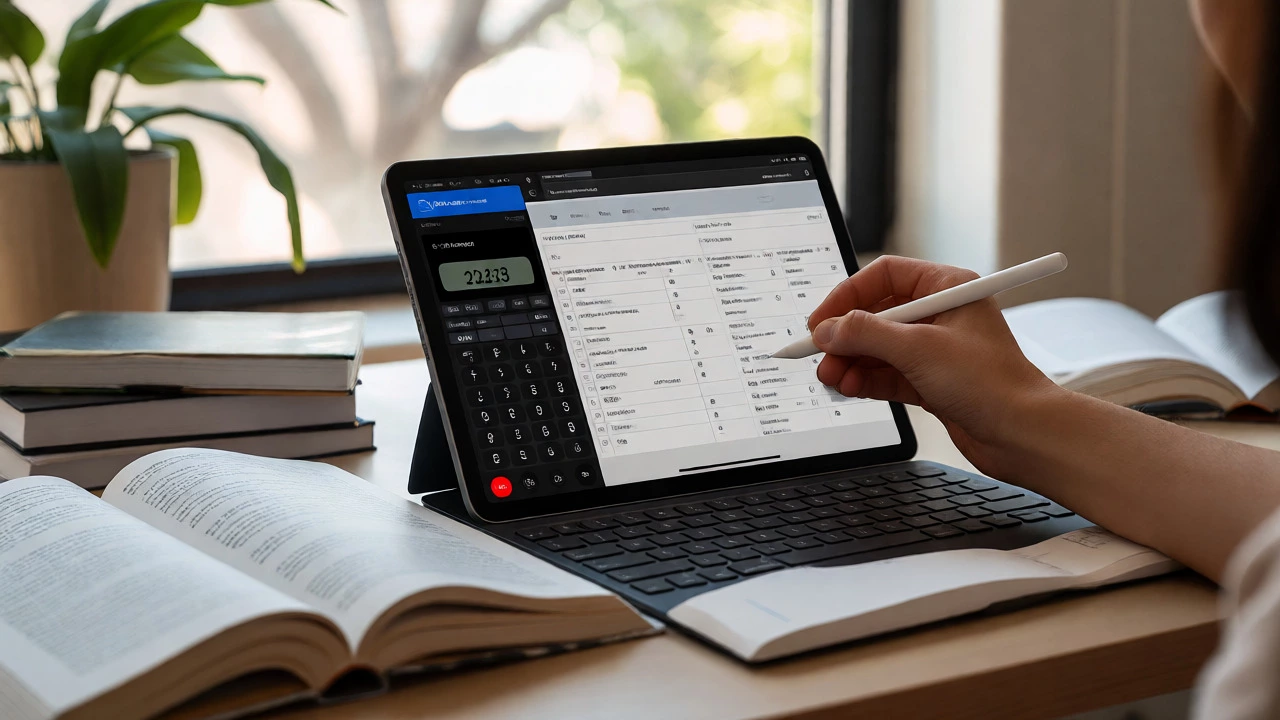
If you are looking for help, traditional tutoring methods are outdated. Flashcards for vocabulary words in isolation are less effective when the test asks you to determine the meaning of a word in context within a 75-word text. Effective preparation now requires practicing on the actual Bluebook app, the platform used for the test. Familiarity with the interface is half the battle. Knowing how to flag questions, navigate between modules, and use the annotation tools saves mental energy during the real exam.
Good tutors now focus on strategy over content memorization. They teach you how to manage the timer, which varies by module. They drill you on identifying the "main idea" quickly without reading every word. They show you how to leverage the Desmos calculator for visual problem-solving. The goal isn't to know every grammar rule in the book; it's to recognize patterns fast enough to beat the clock. If your tutor is still making you write essays by hand or read ten-page articles, they haven't updated their playbook for 2026.
Common Pitfalls That Make the Test Feel Harder
Most complaints about the SAT being "harder" stem from poor preparation habits rather than the test itself. Here are the biggest traps:
- Relying on old practice tests: The 2016-2023 tests had long passages. Practicing on them conditions your brain for slow, deep reading. The Digital SAT demands speed and precision. Switching late causes panic.
- Ignoring the adaptive nature: Students often think they can "coast" through the first module. But a bad start locks you out of the high-score ceiling. Every question in Module 1 is critical.
- Underestimating the calculator: Not learning Desmos shortcuts puts you at a significant disadvantage in Math. It’s not just a tool; it’s a strategic asset.
- Vocabulary overload: Trying to memorize 1,000 obscure words is inefficient. Focus on common academic roots and context clues instead.
Another issue is fatigue management. While the test is shorter, the intensity is higher. There are fewer breaks, and the pacing is relentless. Students who burn out halfway through often blame the difficulty, but it’s really an endurance issue. Building stamina through full-length digital simulations is essential.
What This Means for Your Application Strategy
Colleges are aware of these changes. Most institutions have recalibrated their admissions criteria to account for the digital shift. Some schools have remained test-optional, but for those requiring scores, a competitive range has stabilized. At top-tier universities, a 1400+ is still the baseline for competitiveness, though the distribution of scores has tightened. The gap between a 1300 and a 1400 is smaller in terms of raw points but larger in terms of percentile ranking due to the adaptive scaling.
If you are aiming for a scholarship or admission to a selective program, treat the SAT as a skill-based assessment, not a knowledge dump. You are being tested on your ability to process information quickly under pressure. That is a valuable life skill, regardless of college admissions. The "hardness" is subjective. If you prepare correctly, using modern resources and understanding the algorithm, the test becomes manageable. If you rely on outdated tactics, it will feel impossibly difficult.
Is the Digital SAT easier than the old paper SAT?
It is not necessarily easier, but it is shorter and more focused. Many students find the lack of long reading passages reduces fatigue, but the adaptive format increases pressure because early mistakes limit your maximum possible score. The content is similar, but the delivery requires faster processing speeds.
Can I still get a perfect score on the Digital SAT?
Yes, a perfect score is still 1600. However, achieving it requires performing exceptionally well in both modules. Because the test adapts, you must consistently answer correctly in the first module to access the hardest questions in the second, which are required to reach the upper percentiles.
Do colleges care about the difference between paper and digital scores?
No, colleges view them as equivalent. The College Board provides concordance tables that allow admissions officers to compare digital scores with historical paper scores accurately. Your score is interpreted within the context of the test version you took.
Should I take a practice test before registering for the real SAT?
Absolutely. Taking a full-length official practice test on the Bluebook app helps you gauge your starting point and familiarizes you with the interface. It reveals whether you struggle with time management, specific question types, or the adaptive logic, allowing you to tailor your study plan effectively.
How much does the built-in calculator affect my Math score?
Significantly. Proficiency with the embedded Desmos calculator can save several minutes per section and simplify complex algebraic problems. Students who ignore it often run out of time or make manual calculation errors. Learning its functions is considered a critical part of modern SAT prep.
Write a comment