

Homeschool vs. Traditional School: Success Metrics Calculator
There is a persistent myth that homeschooling is an educational experiment with uncertain results. Critics often argue that children educated at home lack the socialization and rigorous academic preparation needed to thrive in the modern world. But does the data support this skepticism, or does it reveal a different story?
The short answer is yes, but with nuance. Research consistently shows that homeschooled students perform better than their traditionally schooled peers on standardized tests and achieve higher rates of college enrollment. However, "doing better" isn't just about grades; it involves social confidence, mental health, and long-term career satisfaction. To understand whether homeschooling truly leads to better life outcomes, we need to look past the anecdotes and examine the concrete evidence regarding academics, social development, and adult success.
Academic Performance: Beyond the Classroom Walls
When people ask if homeschooled kids do better, they are usually thinking about test scores first. The data here is surprisingly robust. Multiple studies, including large-scale analyses by researchers like Brian Ray and Dr. Douglas Hart, indicate that homeschooled students score significantly higher on standardized achievement tests than public school students.
On average, homeschooled students score between the 70th and 80th percentiles nationally. This isn't because these families are inherently smarter, but because the learning environment is optimized for the individual child. In a traditional classroom, a teacher must cater to the median student. At home, if a child grasps algebra quickly, they move on. If they struggle with fractions, they stay there until it clicks. This personalized pacing eliminates the gaps that often derail students in rigid school systems.
| Metric | Homeschooled Students | Traditional Public School Students |
|---|---|---|
| Average Standardized Test Score Percentile | 70th - 80th | 50th (Median) |
| College Enrollment Rate | 63% - 80% | ~40% - 50% |
| College Completion Rate | Higher retention due to self-discipline | Standard national averages |
| Learning Pace | Individualized (Accelerated or Remedial as needed) | Fixed curriculum pace |
It is important to note that these high scores come from diverse socioeconomic backgrounds. While wealthier families can afford tutors and resources, many middle-income families achieve similar results through community libraries, online courses, and focused parental involvement. The key factor is not money, but engagement. A highly engaged parent creates an environment where education is a priority, leading to superior academic outcomes.
Social Skills: Debunking the Isolation Myth
The most common criticism of homeschooling is social isolation. Parents worry their children won't learn how to interact with peers, handle conflict, or navigate group dynamics. Yet, the reality of social development for homeschooled children is quite different from the stereotype of a lonely kid playing alone in a basement.
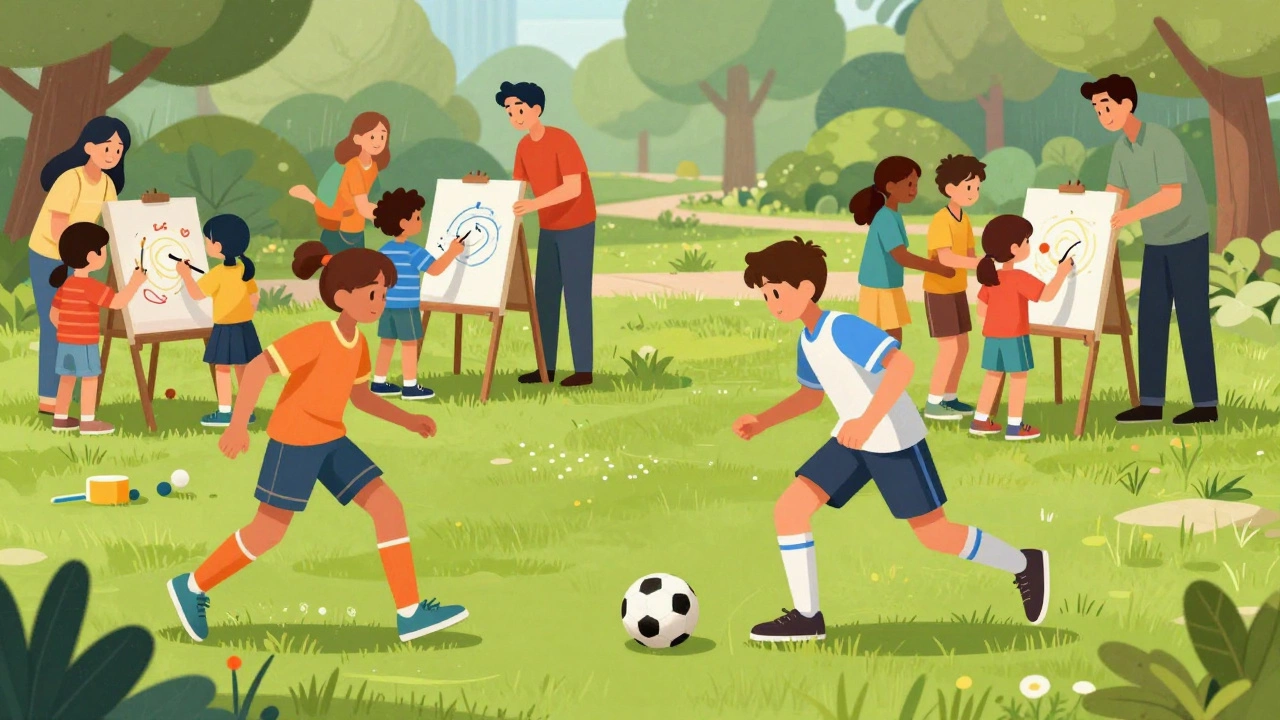
Socialization is not merely exposure to other children; it is the quality of those interactions. In traditional schools, children spend eight hours a day with the same age group, which can sometimes reinforce bullying, peer pressure, and conformity. Homeschooled children, however, interact with a wider range of ages and personalities. They participate in sports teams, church groups, community service projects, co-ops, and local clubs.
Studies on social adjustment show that homeschooled adults report higher levels of civic engagement and volunteerism. They tend to be more confident in mixed-age settings, such as workplaces, where interacting with supervisors, colleagues, and clients of various ages is the norm. Rather than being sheltered, many homeschooled individuals develop stronger interpersonal skills because their social interactions are often chosen and purposeful rather than forced by proximity.
College Admissions and Higher Education
One of the biggest hurdles for homeschoolers has historically been college admissions. Universities were once skeptical of non-traditional transcripts. Today, that landscape has shifted dramatically. Colleges recognize that homeschooled applicants often possess strong self-motivation, time management skills, and a clear sense of direction-traits that are crucial for university success.
According to data from the National Home Education Research Institute (NHERI), approximately 63% to 80% of homeschooled students enroll in college, compared to roughly 40% to 50% of public school graduates. Furthermore, homeschooled students often have higher GPAs in their first year of college. This suggests that the independent study habits formed at home translate well to the autonomous environment of higher education.
Admissions officers now frequently seek out homeschooled applicants because they bring diversity to the campus community. These students often have unique portfolios, including internships, travel experiences, or specialized projects that traditional students may not have had time to pursue due to rigid school schedules.
Long-Term Career and Life Satisfaction
Does the advantage persist into adulthood? Longitudinal studies tracking homeschooled individuals into their careers reveal positive trends. Homeschooled adults are more likely to start their own businesses, engage in creative fields, and report higher job satisfaction. This entrepreneurial spirit stems from the freedom to explore interests deeply during childhood.
In a traditional system, creativity is often stifled by standardized testing and uniform curricula. In contrast, homeschooling allows for unschooling or interest-led learning, where a child might spend months studying astronomy, coding, or art. This deep dive fosters passion and expertise, which later translates into professional competence and fulfillment.
Moreover, mental health outcomes appear favorable. With less exposure to school-related stressors like bullying, excessive homework loads, and competitive grading curves, homeschooled children often develop healthier relationships with learning. They view education as a tool for growth rather than a source of anxiety. This mindset contributes to greater resilience and adaptability in adult life.

Challenges and Considerations
While the data is promising, homeschooling is not without its challenges. It requires significant commitment from parents, who must balance teaching, household management, and possibly employment. Not every family dynamic supports this model. Additionally, access to specialized resources, such as advanced science labs or foreign language immersion, can be difficult without careful planning.
Parents must also ensure legal compliance, which varies by region. In some places, regulations are minimal, while others require detailed lesson plans and regular assessments. Understanding these requirements is essential for a successful homeschooling journey.
Furthermore, the success of homeschooling heavily depends on the quality of instruction. A disorganized or uninvolved approach can lead to gaps in knowledge. Therefore, utilizing structured curricula, joining homeschool co-ops, and leveraging online educational platforms are critical strategies for maintaining academic rigor.
Conclusion: Defining "Better"
So, do homeschooled kids do better in life? The evidence suggests they do, particularly in terms of academic achievement, college readiness, and civic engagement. However, "better" is subjective. For some, success means attending an Ivy League university. For others, it means finding a fulfilling career and maintaining strong community ties. Homeschooling provides a flexible framework that can accommodate both paths.
Ultimately, the outcome depends on the effort invested by the family. When done with intention, resources, and community support, homeschooling offers a powerful alternative to traditional schooling, preparing children not just for tests, but for life.
Are homeschooled students accepted into top universities?
Yes, homeschooled students are regularly admitted to top-tier universities, including Ivy League schools. Admissions officers value the unique perspectives, self-discipline, and often higher GPAs that homeschooled applicants bring. Many colleges have dedicated staff to assist with homeschool applications, recognizing the validity of non-traditional transcripts.
How do homeschooled kids make friends?
Homeschooled children make friends through extracurricular activities, sports teams, religious groups, homeschool co-ops, and community classes. Unlike traditional schools where friendship is based on proximity, homeschool friendships are often based on shared interests and values, leading to deeper connections. They also interact with people of all ages, enhancing their social versatility.
Is homeschooling expensive?
Homeschooling can be affordable. While some families invest in expensive curricula or tutors, many use free resources like public libraries, online open-source materials, and community programs. The cost varies widely depending on the family's choices, but it is generally comparable to or less than private school tuition. Public school supplies and fees are avoided, offsetting some costs.
Do homeschooled kids have special needs accommodations?
Homeschooling can be highly effective for children with special needs because the learning environment can be tailored to their specific requirements. Parents can adjust pacing, use multisensory teaching methods, and incorporate therapy into daily routines. However, accessing specialized medical or psychological services may require coordination with external providers, as these are not provided within the home setting.
What happens if I don't know enough to teach my child?
You do not need to be an expert in every subject. The role of the homeschool parent is to facilitate learning, not necessarily to lecture. You can use pre-made curricula, online courses, tutors, and community classes for subjects you find challenging. Many parents learn alongside their children, turning education into a shared journey. Resources like Khan Academy and local college courses provide excellent support.
Write a comment