
Inclusive Language Converter
Select a phrase you currently use to find more inclusive, respectful alternatives based on the context of your conversation.
Why this shift? -
If you want to move toward a more respectful, modern way of speaking, the goal isn't just to swap one word for another. It's about shifting how you see the person. Whether you're a teacher, a parent, or just someone who wants to be a better ally, using inclusive language helps you focus on the person's identity and strengths rather than just their deficits.
Quick Summary: Better Ways to Speak
- Person-First Language: Focuses on the person before the diagnosis (e.g., "student with autism").
- Identity-First Language: Embraces the disability as part of the identity (e.g., "autistic person").
- Support-Based Language: Focuses on what the person requires to succeed (e.g., "accessible requirements").
- Neurodiversity Framework: Views differences as natural variations of the human brain.
Why "Special Needs" is Falling Out of Favor
Let's be real: the word "special" is a bit of a linguistic trick. In most contexts, "special" means something wonderful or unique. But in a classroom or medical setting, it's often used as a euphemism for "disabled." This can feel dishonest to the person living with the condition. Moreover, the idea of a "need" being "special" suggests that things like accessibility or extra time are "extras" rather than fundamental rights.
Think about it this way: if a person uses a wheelchair, is the need for a ramp "special," or is it just a basic requirement for movement? When we label needs as "special," we accidentally move them into a category of "bonus" or "exception," which can lead to those needs being ignored in the design of public spaces and curricula.
The Power of Person-First Language
For decades, the standard in healthcare and education has been Person-First Language is a linguistic approach that places the individual before their diagnosis to avoid defining the person by their condition. This is the logic behind saying "a child with Down syndrome" instead of "a Down syndrome child."
The idea here is simple: the disability is something the person has, not who they are. It separates the human being from the medical label. This is incredibly helpful in formal settings, such as Individualized Education Programs (IEPs) or medical records, where you want to ensure the focus remains on the student's overall well-being and growth.
The Rise of Identity-First Language
Wait, if person-first is the standard, why are some people asking for the opposite? Enter Identity-First Language, which is a way of speaking where the disability is used as an adjective to describe the person, treating it as an inherent part of their identity.
Many people in the Autistic community and the Deaf community strongly prefer this. For them, being autistic isn't a "burden" they carry; it's the way their brain is wired. It's as fundamental to who they are as being left-handed or being tall. To these individuals, saying "person with autism" feels like you're trying to distance them from a part of their identity that they are proud of or that fundamentally shapes their experience of the world.
| Approach | Example Phrase | Core Philosophy | Best Used When... |
|---|---|---|---|
| Person-First | "Student with ADHD" | The person is separate from the diagnosis. | In medical or formal educational documents. |
| Identity-First | "Autistic student" | The disability is a core part of the identity. | Speaking with people who prefer this terminology. |
| Support-Based | "Accessible learning needs" | Focuses on the environment and tools. | Discussing logistics, architecture, or software. |
Embracing the Neurodiversity Framework
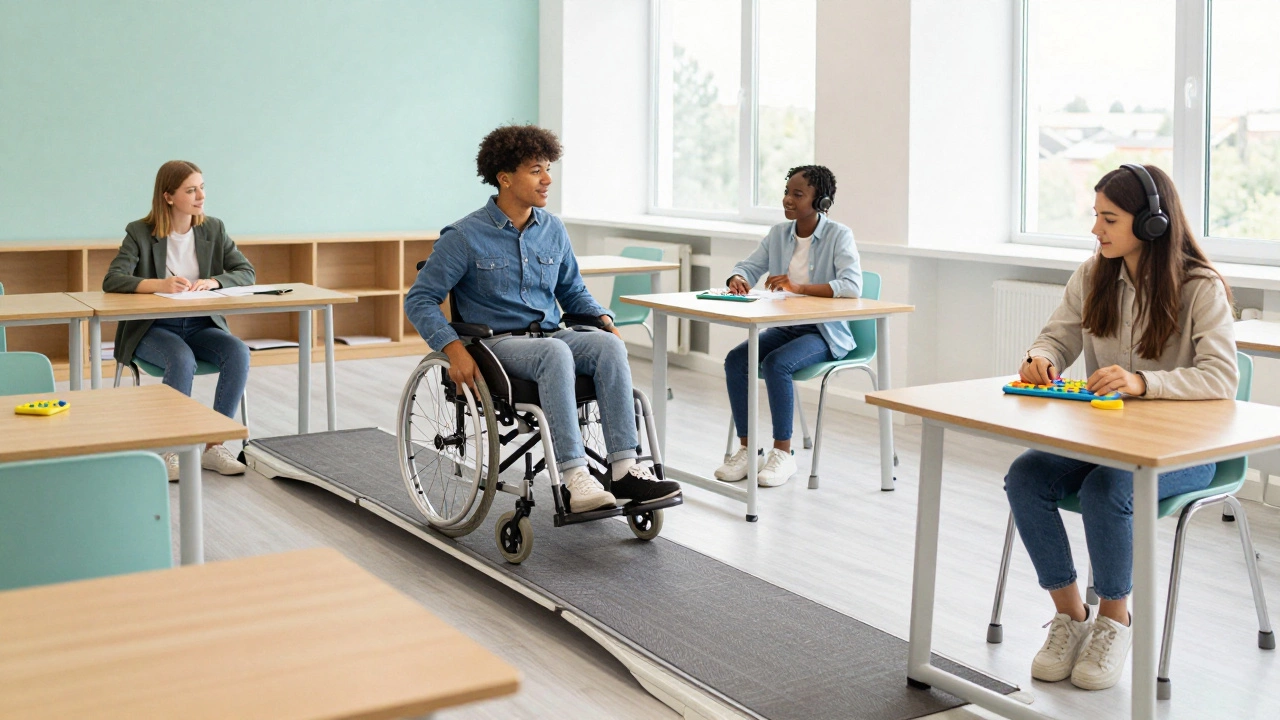
If you want to move away from "special needs" entirely, the most modern shift is toward the concept of Neurodiversity, which is the idea that neurological differences-like Autism, ADHD, and Dyslexia-are natural variations of the human genome rather than defects to be cured.
Instead of saying someone has a "special need" in the classroom, you might say they are neurodivergent. This word changes the conversation from "what is wrong with this person?" to "how does this person's brain work differently?"
For example, instead of saying "This student has special needs regarding focus," you could say, "This student is neurodivergent and benefits from tactile learning tools." See the difference? One sounds like a problem to be solved; the other sounds like a preference to be accommodated.
Concrete Alternatives for Different Scenarios
Depending on who you're talking to, you'll need different phrases. Here are some real-world swaps you can start using today:
In the Classroom or School Setting
- Instead of "Special needs student," try "Student with additional support needs" or "Student with a disability."
- Instead of "Special education," try "Adaptive learning" or "Inclusive education."
- Instead of "Behavioral issues," try "Support needs for emotional regulation."
In Professional or Corporate Environments
- Instead of "Special requirements," try "Accessibility requirements" or "Reasonable accommodations."
- Instead of "Disabled employee," try "Employee with a disability" (unless they've told you they prefer identity-first).
- Instead of "Handicapped access," try "Accessible entry" or "Universal design."
In Social or Casual Conversations
- Instead of "He has special needs," try "He's neurodivergent" or "He has some extra support needs."
- Instead of "She's special," (which can sound condescending), try "She has a different way of processing information."

The Golden Rule: Just Ask
You might be thinking, "This is a lot of rules! How am I supposed to know which one to use?" Here is the secret: there is no single "correct" word that satisfies everyone. Some people love the term "disabled" because it's a political statement about the lack of accessibility in the world. Others find it harsh. Some prefer "differently abled," while others find that phrase too sugary and fake.
The most respectful thing you can do is ask the person (or their parents, if they are a child) how they describe themselves. A simple, "I want to make sure I'm using language you're comfortable with-do you prefer person-first or identity-first language?" goes a long way. It shows that you see them as an individual with agency, not as a category in a textbook.
Avoiding the "Inspiration Porn" Trap
While we're talking about language, it's worth mentioning the phrases we should avoid even when we think we're being nice. Avoid calling someone "brave" or "an inspiration" just for existing in a public space or completing a normal task. This is often called "inspiration porn." When we call a student with a disability "inspiring" for simply attending a regular class, we're inadvertently suggesting that their existence is a miracle rather than a right.
Focus on their actual achievements. Instead of "It's so inspiring that she can paint with her feet," try "Her technique with the brush is incredibly precise." One focuses on the disability as a hurdle; the other focuses on the skill and the art.
Is it wrong to use the phrase "special needs"?
It isn't "wrong" in the sense that it's still widely understood and often used in legal or official documents. However, many advocates and people with disabilities find it outdated or patronizing because it avoids the word "disability" and implies that the needs are "extra" rather than fundamental. Moving toward more specific language like "accessibility needs" or "neurodivergence" is generally preferred in modern, inclusive settings.
What is the difference between neurodivergent and disabled?
"Neurodivergent" is an umbrella term for people whose brains function differently from what is considered "typical" (e.g., Autism, ADHD, Dyslexia). "Disabled" is a broader term that covers any physical or mental impairment that limits a person's movements, senses, or activities. While many neurodivergent people are also disabled, not all are, and not all disabled people are neurodivergent.
Should I use "person with autism" or "autistic person"?
This depends entirely on the individual. Person-first language ("person with autism") is often the default in clinical and educational settings. However, many autistic adults prefer identity-first language ("autistic person") because they view autism as an intrinsic part of who they are. The best practice is to ask the person their preference.
Is "differently abled" a good alternative?
While intended to be positive, "differently abled" is often viewed as a euphemism that minimizes the real challenges and systemic barriers that disabled people face. Most advocates prefer direct language like "disabled person" or "person with a disability" because it acknowledges the reality of their experience without sugarcoating it.
How do I handle this in a formal IEP or school report?
In formal documents, stick to the legal terminology required by your region, but supplement it with support-based language. Instead of focusing on what the student "lacks," focus on what the student "requires." For example, instead of "The student has special needs in reading," use "The student requires assistive technology and extended time for reading comprehension tasks."
Write a comment